
Helge von Koch1870–1924
Recursive curve
Swedish mathematician who described the Koch curve: a finite construction enclosing an infinitely long, nowhere-smooth boundary.
Each side of an equilateral triangle is replaced by a four-segment bump. Iterate and the perimeter grows without bound inside a finite area.
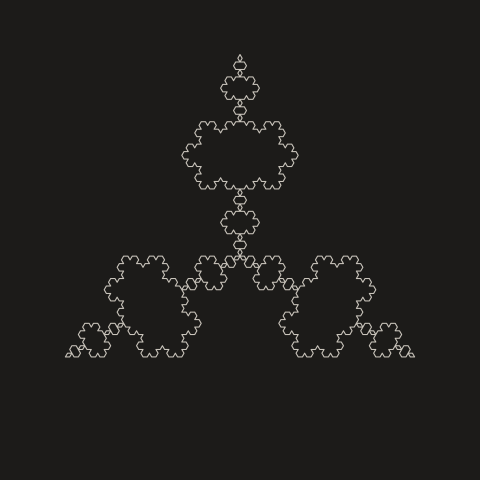
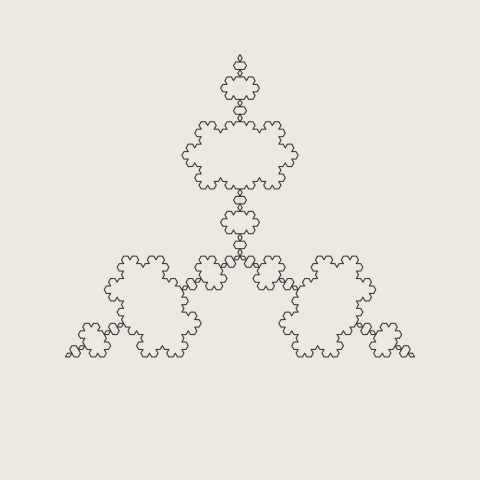
Helge von Koch, 1904
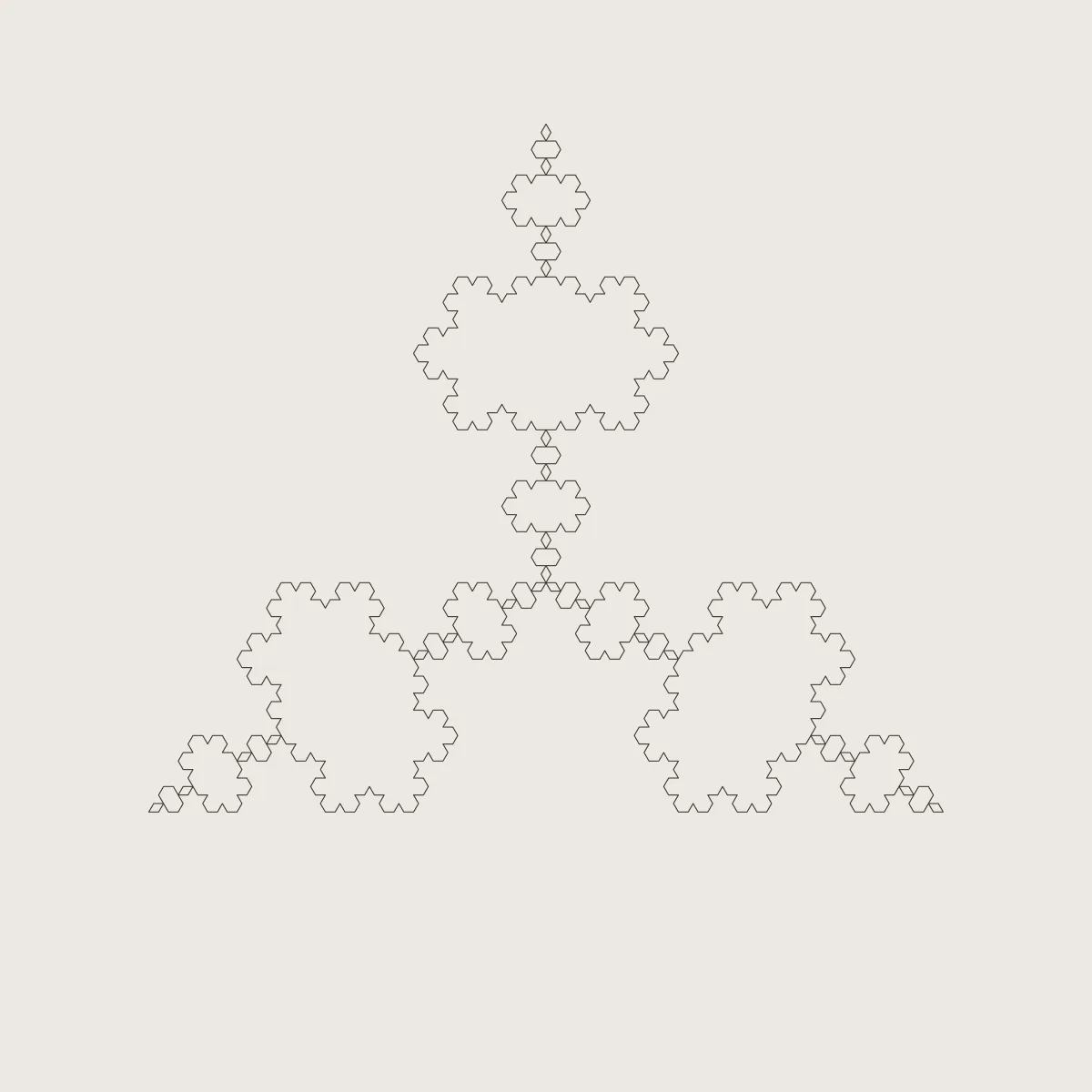
Von Koch’s 1904 curve: replace the middle third of every segment with two sides of an equilateral bump. Each generation multiplies length by 4/3, so the perimeter is infinite while the area stays finite, the same self-similarity as a snowflake, a coastline, a tree. Motion plays the construction: the triangle grows its bumps, generation by generation, holds, then recedes.
Behind the mathematics
Recursive curve
Swedish mathematician who described the Koch curve: a finite construction enclosing an infinitely long, nowhere-smooth boundary.