
Johann Karl Friedrich Zöllner1834–1882
The illusion, 1860
German astrophysicist who noticed that short slanted hatching makes long parallel lines appear to diverge.
Long parallels crossed by short strokes that lean one way, then the other. The parallels lean with them.
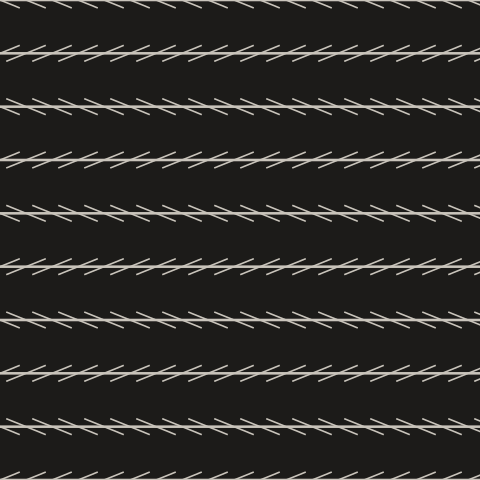
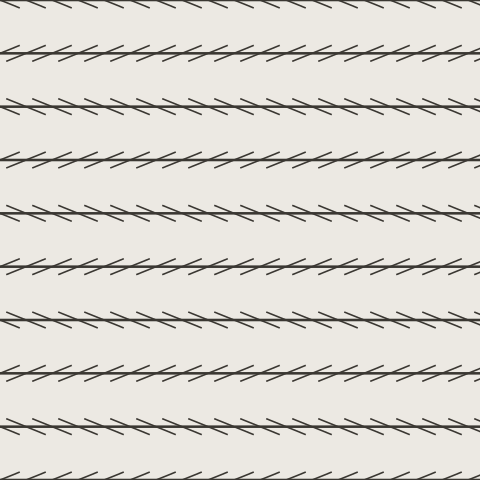
Johann Karl Friedrich Zöllner, 1860
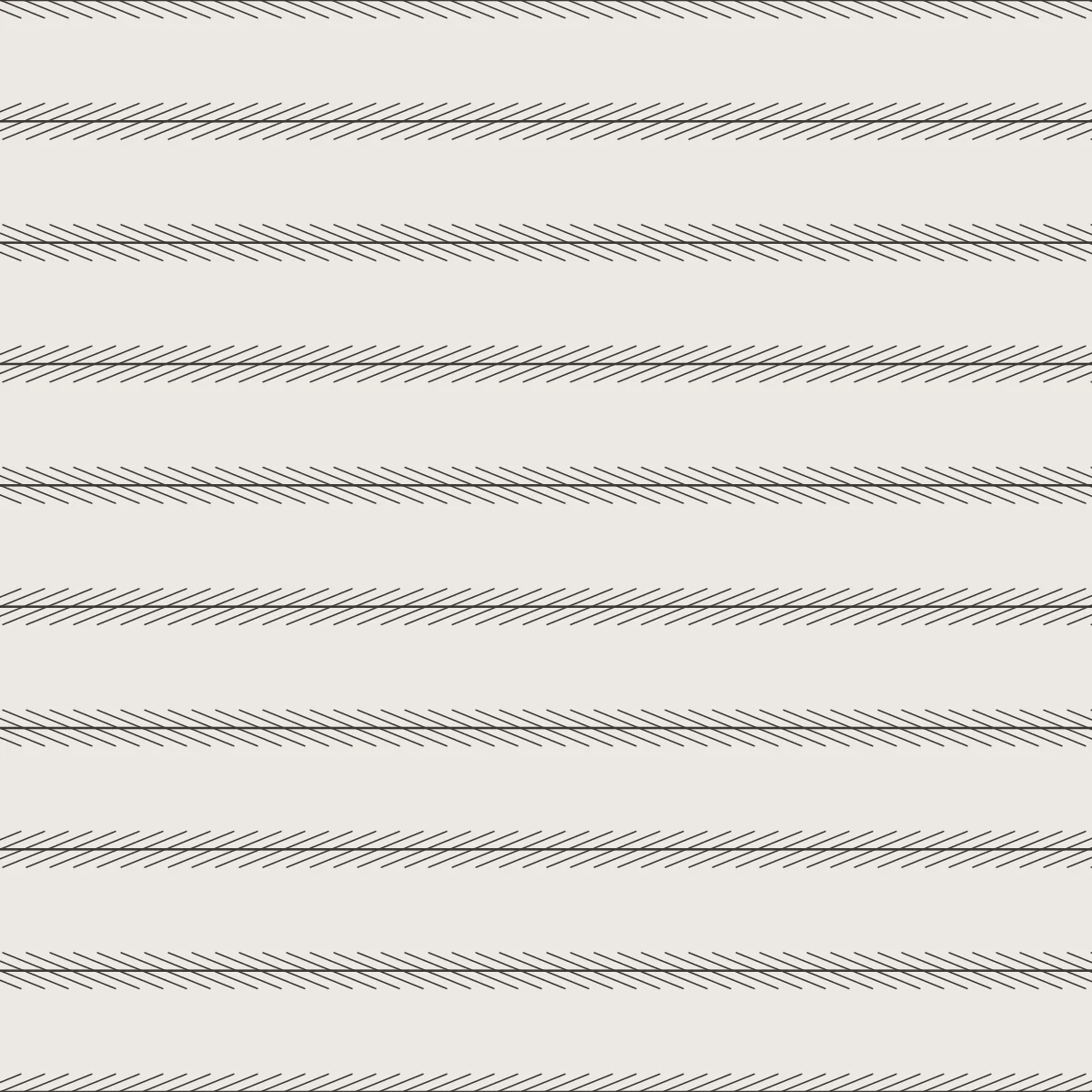
Zöllner noticed the effect on a piece of printed fabric. Where a short stroke meets a long line at an acute angle, the angle is read as larger than it is, and the long line is turned the other way to make room. Because the strokes alternate direction from line to line, each pair appears to converge and diverge.
The tilt is strongest near twenty degrees and vanishes when the strokes are square to the line.
Behind the mathematics
The illusion, 1860
German astrophysicist who noticed that short slanted hatching makes long parallel lines appear to diverge.