
Richard Gregory1923–2010
Explained the illusion, 1979
British psychologist who, with Priscilla Heard, studied why the parallel rows of the café wall illusion appear to tilt.
Offset rows of blocks divided by thin mortar. Every row is exactly horizontal, and almost nobody sees them that way.
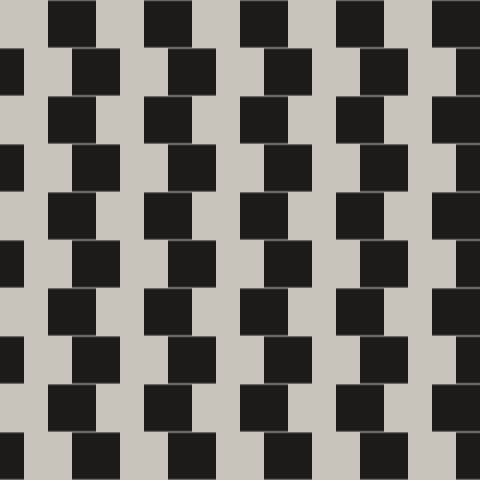

Richard Gregory, 1979 · after the kindergarten illusion, 1898
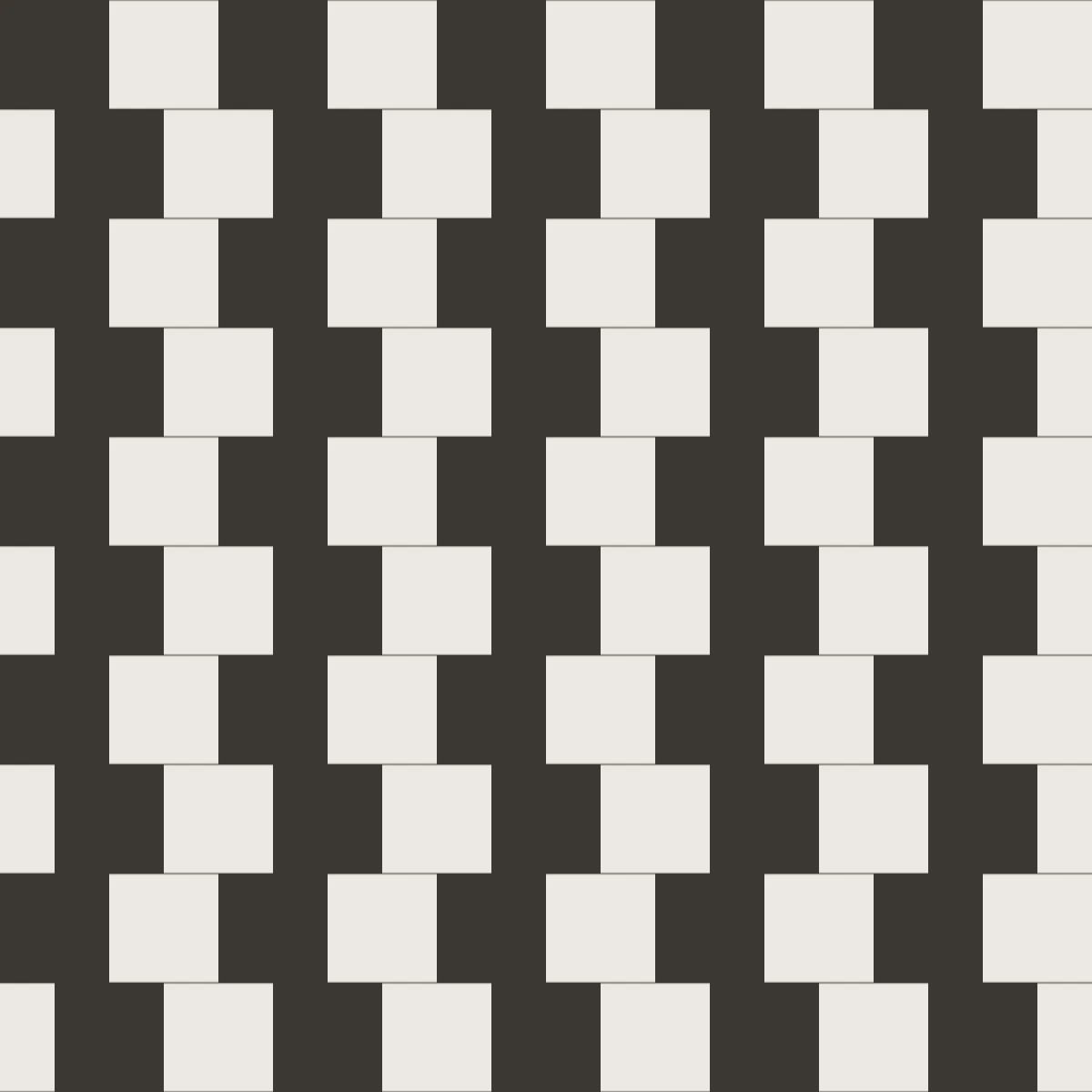
Named for a café in Bristol whose tiling Richard Gregory noticed in 1979, though the effect had been published eighty years earlier. The wedges seen at each mortar line come from the way small light and dark neighbours are averaged before edges are found: the mortar is dragged toward the nearer block on each side, and the row inherits the tilt. It disappears if the mortar matches either block, which is what the tone control is for.
Behind the mathematics
Explained the illusion, 1979
British psychologist who, with Priscilla Heard, studied why the parallel rows of the café wall illusion appear to tilt.