
George Bain1881–1968
The methods of construction, 1951
Scottish artist and teacher whose Celtic Art: The Methods of Construction (1951) showed how the knots of Insular manuscripts and Pictish stones are drawn from a simple grid, and revived the art.
Two families of bands crossing on the diagonal, each one over, then under, without exception. No band ever ends.
Insular plaitwork · Book of Kells and Pictish stone borders
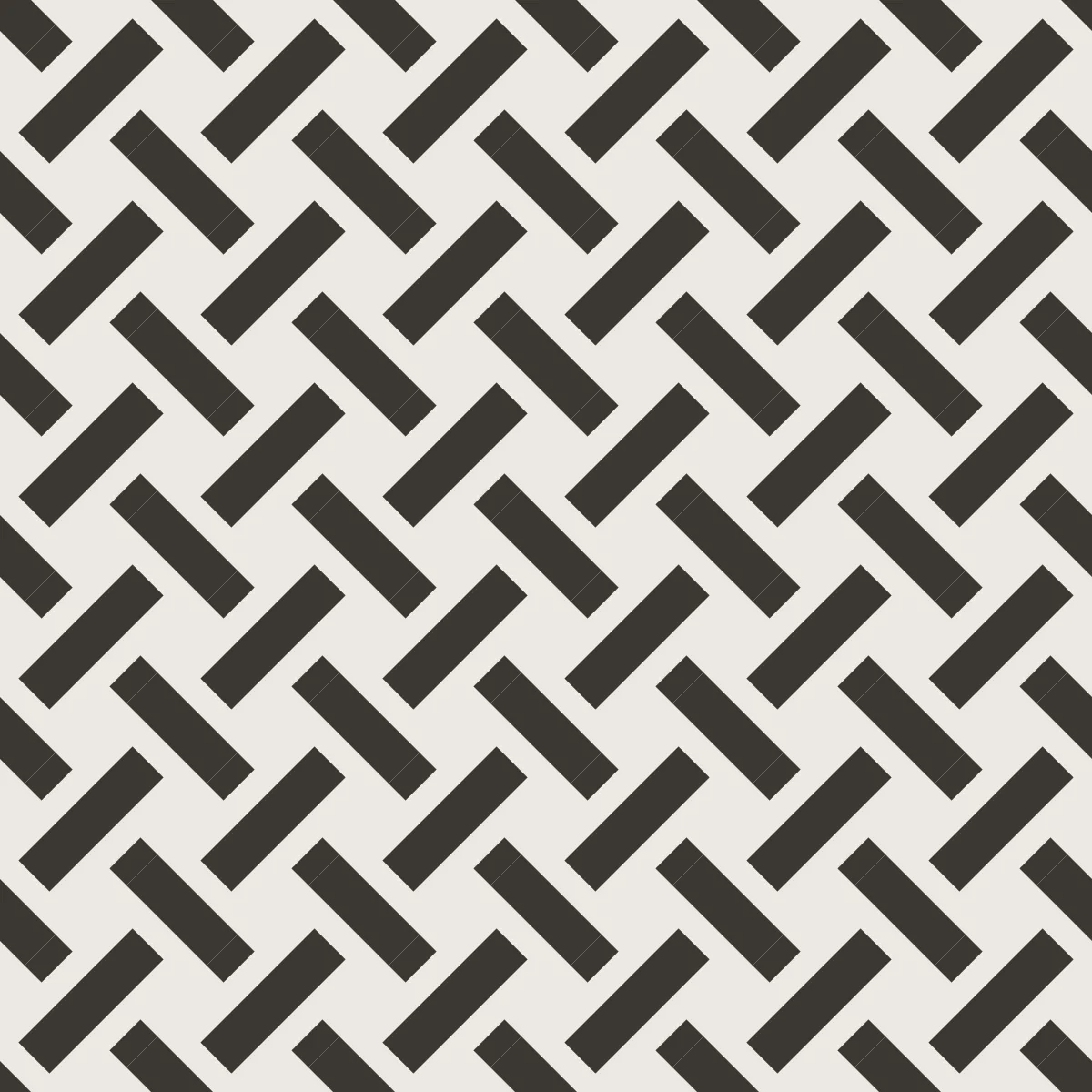
The border plait, drawn on every Insular manuscript and half the standing stones in Scotland. The rule is only that over-and-under strictly alternates at every crossing. Keep to it and the strands close into a small number of endless loops; break it anywhere and the whole thing unpicks into separate pieces.
Nothing is erased in the drawing: each band is laid down twice, once in the colour of the page and once in ink, and the pale stroke cuts whatever it passes over.
Behind the mathematics
The methods of construction, 1951
Scottish artist and teacher whose Celtic Art: The Methods of Construction (1951) showed how the knots of Insular manuscripts and Pictish stones are drawn from a simple grid, and revived the art.