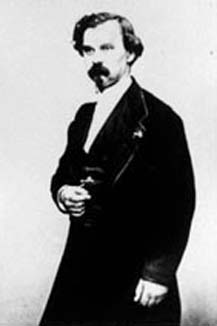
Hugh Blackburn1823–1909
The Y-suspended pendulum
Scottish mathematician whose Y-suspended pendulum traced harmonic figures in sand, the ancestor of the harmonograph.
Two damped oscillations draw a slowly closing weave. A second, slightly detuned pair opens the threads into folds, a mathematical version of a pendulum drawing machine.
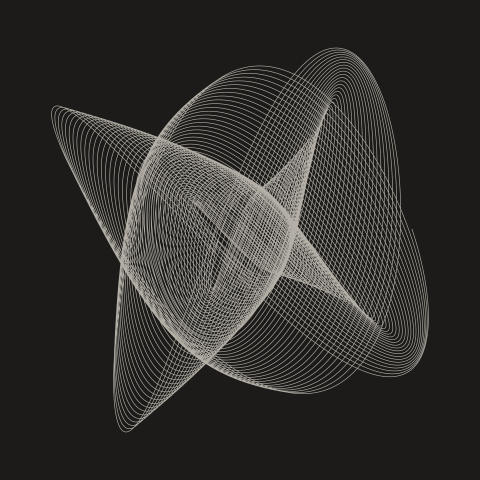
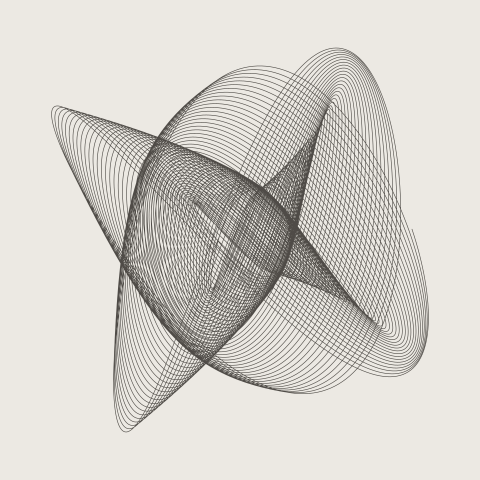
Pendulum drawing · after Hugh Blackburn and Jules Antoine Lissajous
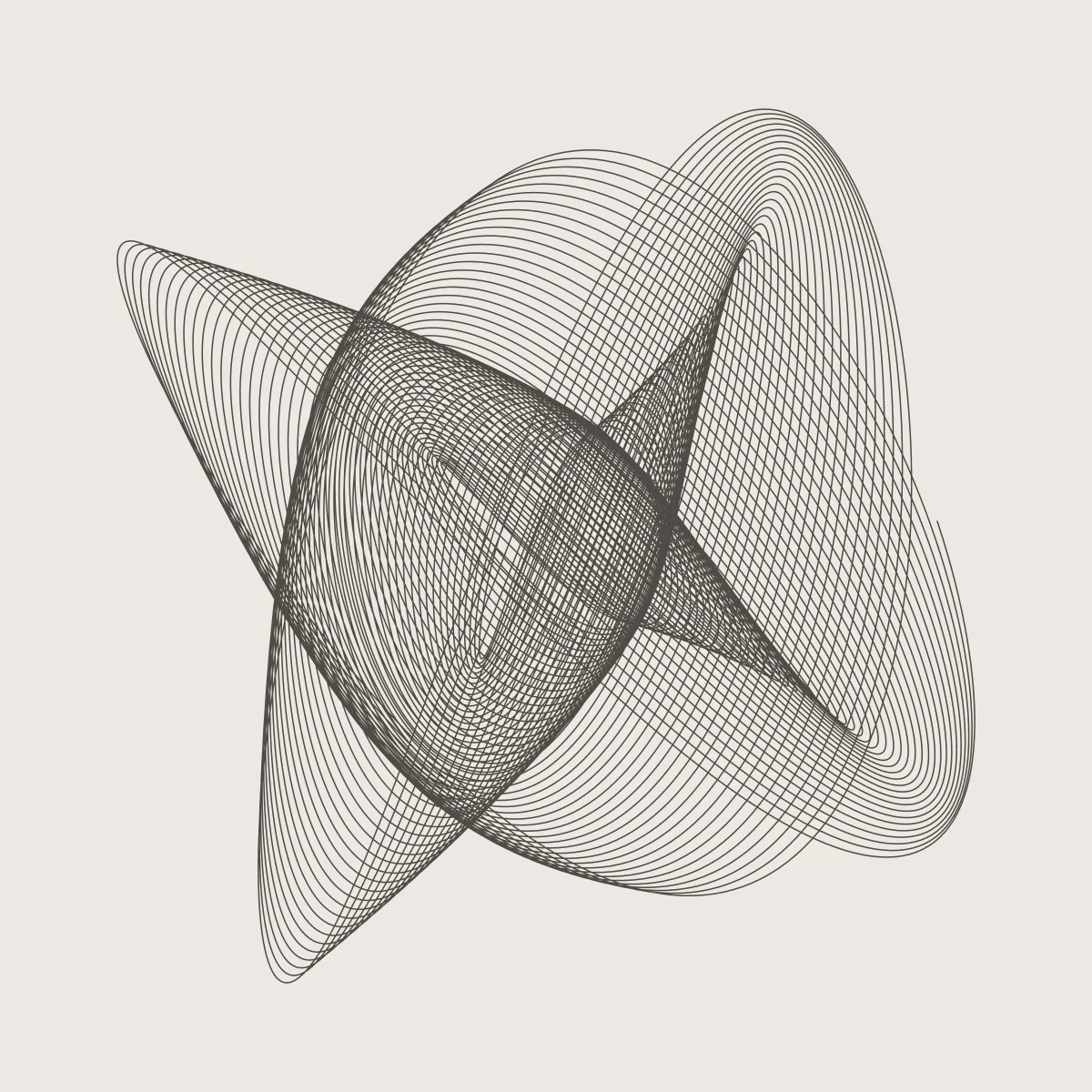
Each coordinate is a sum of damped sine waves. Rational frequency ratios establish the figure; detuning makes successive loops drift apart. Damping contracts the trace, while the secondary pair gives the weave its depth. These are idealised small-angle pendulums.
Behind the mathematics
The Y-suspended pendulum
Scottish mathematician whose Y-suspended pendulum traced harmonic figures in sand, the ancestor of the harmonograph.
Harmonic figures
French physicist who reflected light between two vibrating tuning forks to draw the closed harmonic figures now named after him.