
M. C. Escher1898–1972
Inspiration: the metamorphosis prints
Dutch graphic artist whose tessellations of interlocking creatures, impossible buildings and metamorphoses brought tiling and symmetry to a wide audience.
A plain grid of squares whose shared edges bend across the sheet until the tiles lock together like creatures. However far they bend, every tile still fits its neighbours exactly.
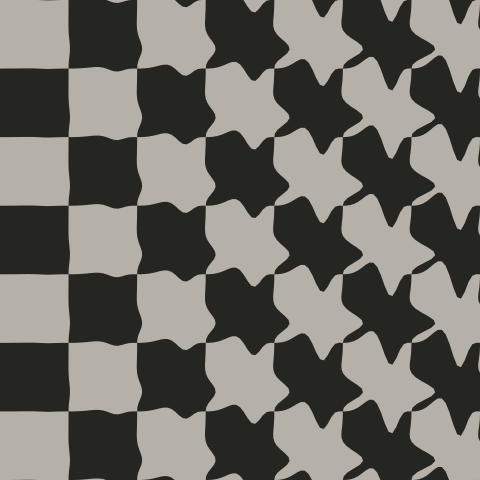
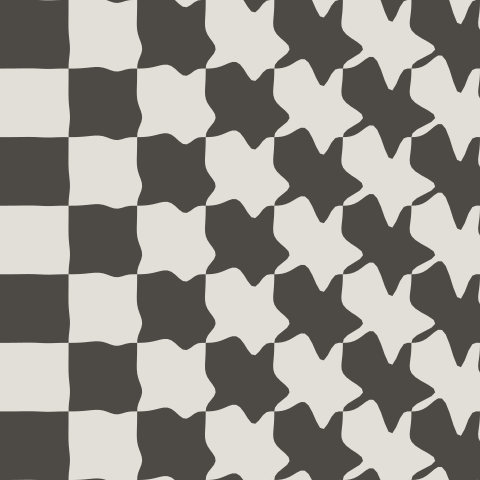
Inspired by M. C. Escher's metamorphoses
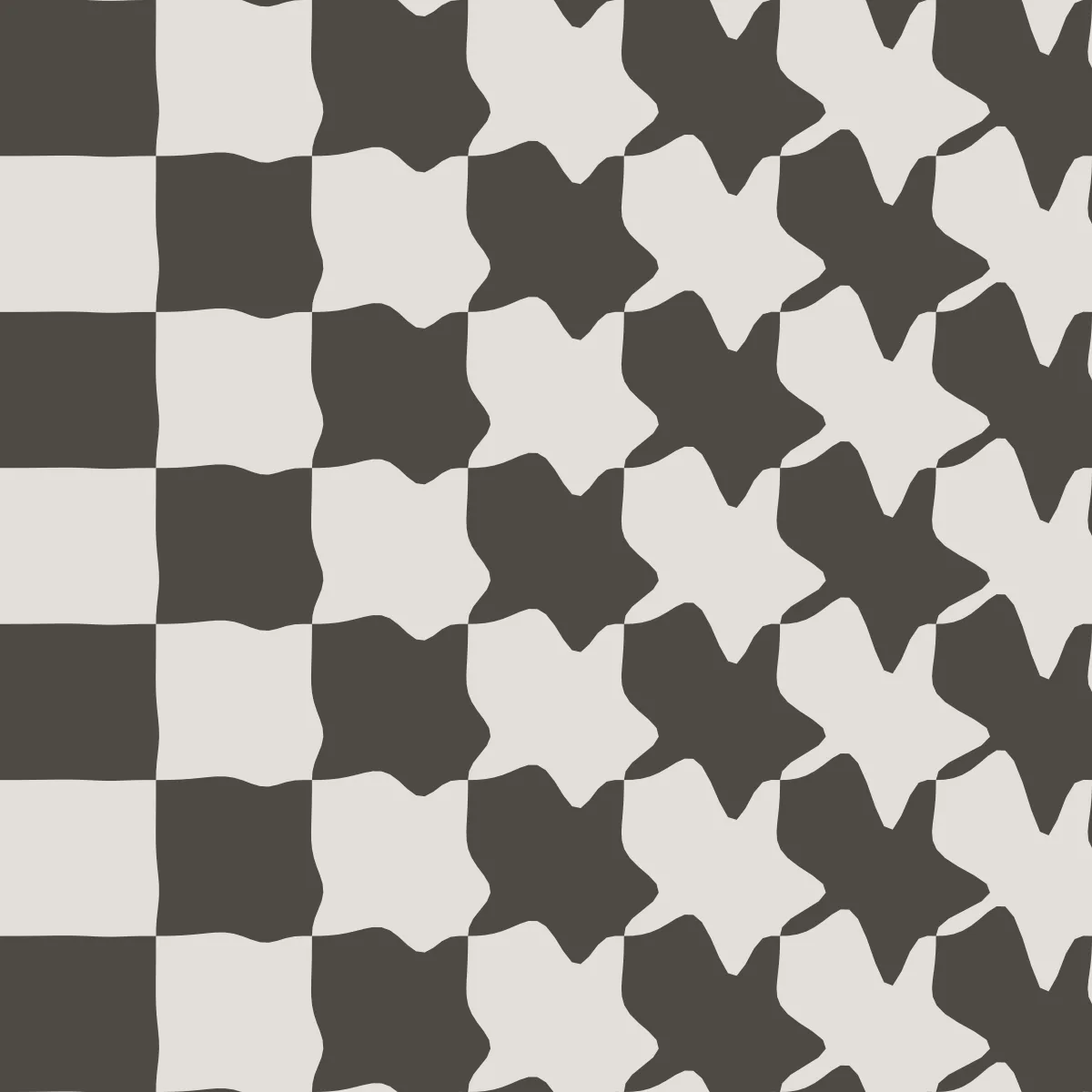
Escher's long metamorphosis prints let a grid of plain shapes turn, step by step across the paper, into interlocking birds, fish and lizards. This drawing borrows the idea, not the creatures. It starts as a grid of squares, and every edge between two tiles is replaced by the same curve on both sides of it.
Because the curve is shared, the tiles always fit, with no gap and no overlap, however strongly the edges bend. The bending grows across the sheet, or down it, or out from the middle, so plain squares at one end become interlocking pieces at the other, and alternate tiles are inked so figure and ground trade places. In motion the change sweeps across the sheet and back.
Behind the mathematics
Inspiration: the metamorphosis prints
Dutch graphic artist whose tessellations of interlocking creatures, impossible buildings and metamorphoses brought tiling and symmetry to a wide audience.