Reaction Fields

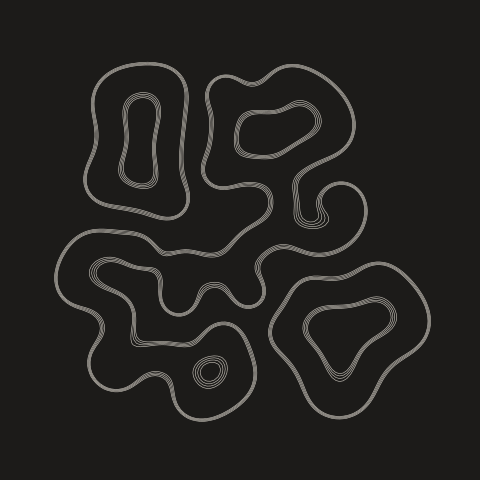
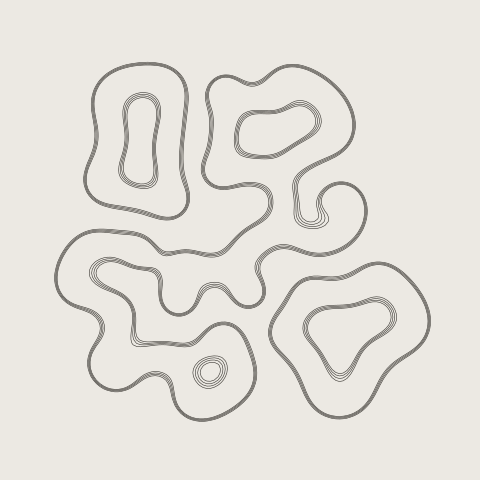
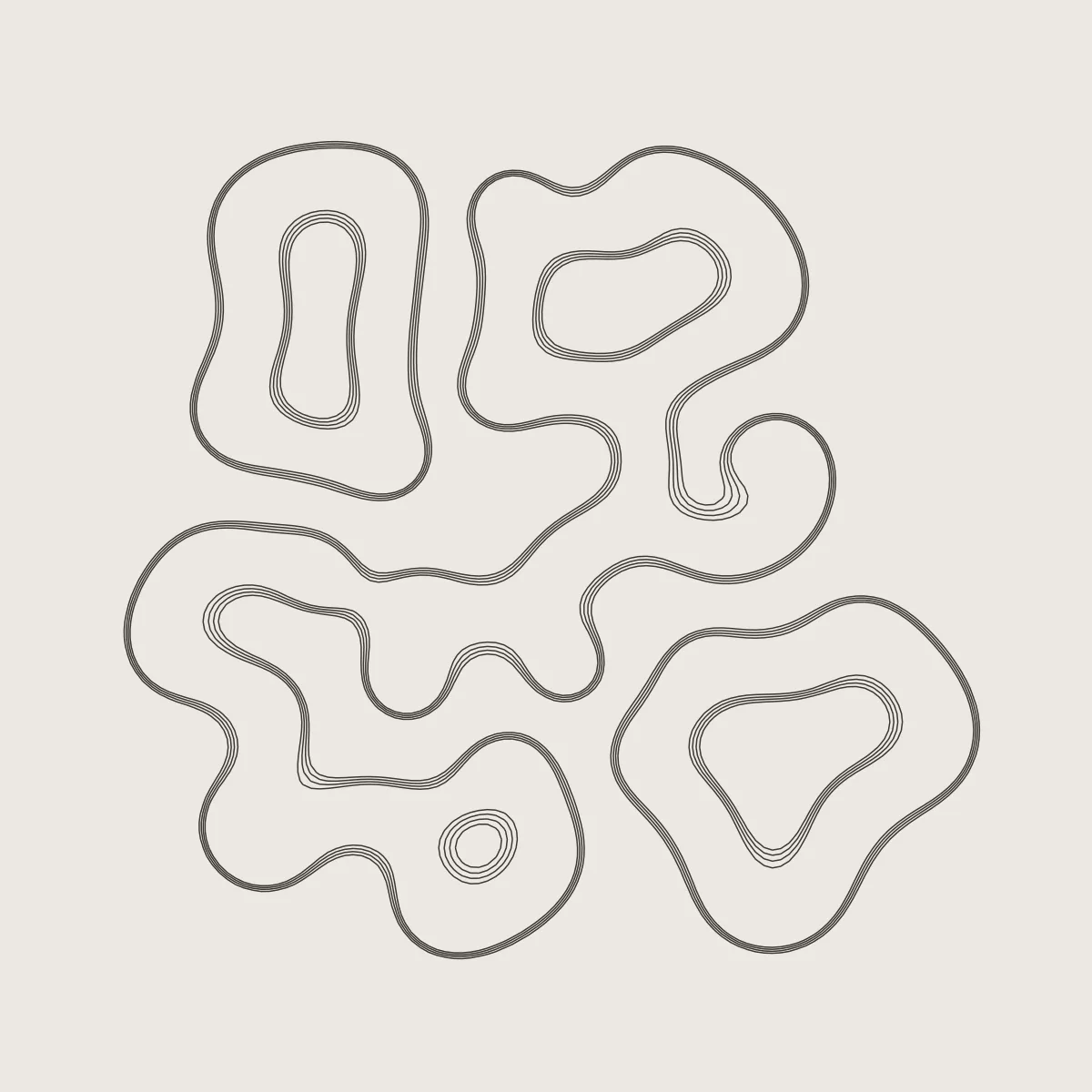
Two reacting, diffusing chemicals grow into islands and labyrinths. Watch cells spread, divide and meet, then scrub back to a composition worth keeping.

Reaction Fields: Two reacting, diffusing chemicals grow into islands and labyrinths. Watch cells spread, divide and meet, then scrub back to a composition worth keeping.Reaction Fields: Two reacting, diffusing chemicals grow into islands and labyrinths. Watch cells spread, divide and meet, then scrub back to a composition worth keeping.

About this pattern

Gray–Scott reaction–diffusion · concentration contours

Reaction Fields, reaction–diffusion system, drawn by GART: Two reacting, diffusing chemicals grow into islands and labyrinths. Watch cells spread, divide and meet, then scrub back to a composition worth keeping.
Reaction Fields · CC BY 4.0

A seeded, fixed-step Gray–Scott simulation on a 112 × 112 periodic grid. Feed and removal rates choose a regime; contour lines trace chemical concentration. Playback evolves the simulation to a final frame and stops. Rewinding restores the same state, rather than reversing the chemistry.

Behind the mathematics

Alan Turing1912–1954

Reaction and diffusion as the source of pattern, 1952

English mathematician who proposed in 1952 that two chemicals, reacting and diffusing at different rates, could produce the spots and stripes of living things from a uniform start.