
Alan Turing1912–1954
Reaction–diffusion morphogenesis
English mathematician who proposed in 1952 that two chemicals, reacting and diffusing at different rates, could produce the spots and stripes of living things from a uniform start.
Two chemicals, one spreading faster than the other, settle into spots, mazes or coral from an almost uniform start. No edge anywhere, so it repeats forever.
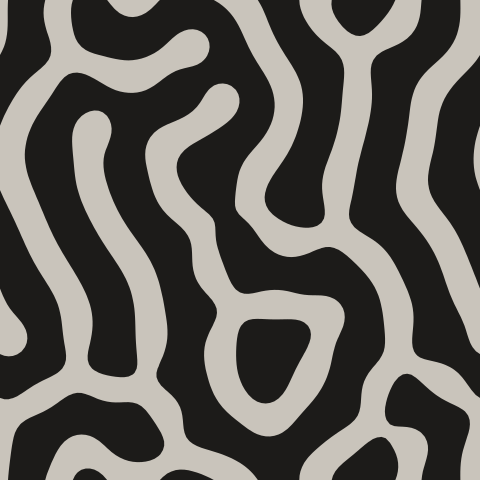
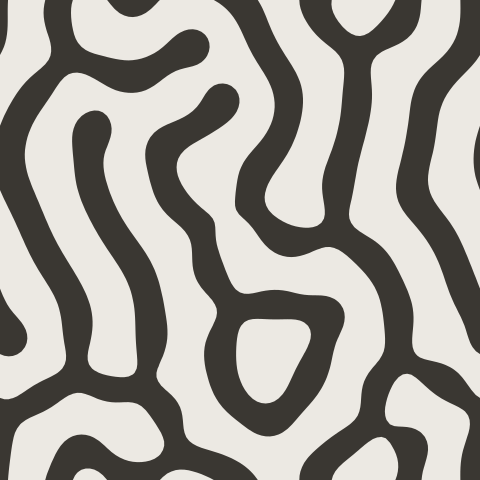
Alan Turing, 1952 · Gray–Scott model, 1984
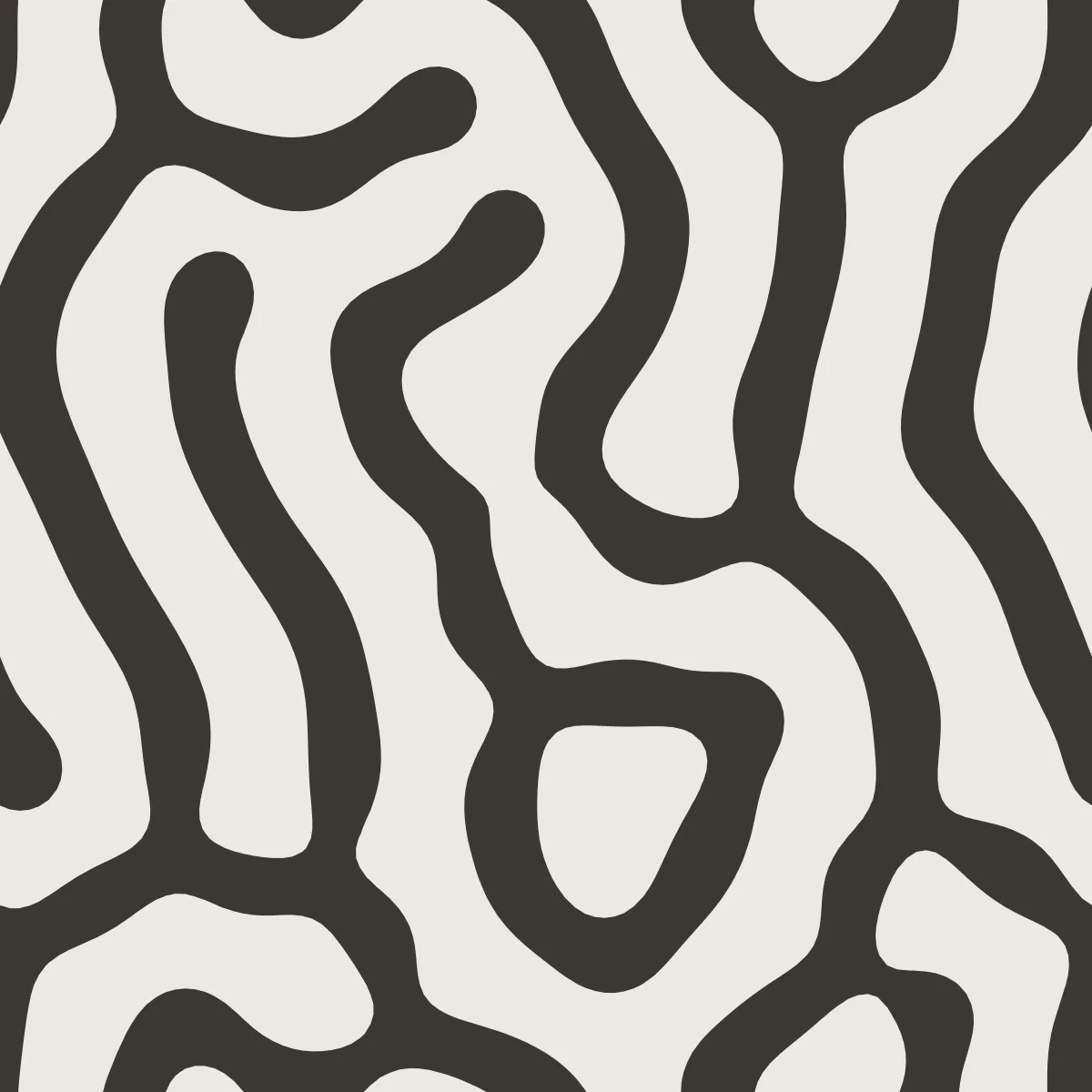
Turing's 1952 paper argued that a slowly diffusing activator and a fast-diffusing inhibitor are enough to break a uniform mixture into a pattern with a characteristic size, the mechanism now credited with some leopard spots, zebrafish stripes and the ridges of fingerprints. This is the Gray–Scott version of that system, run until it stops changing, on a grid whose edges join its opposite edges.
The finished pattern has no boundary, which is why it tiles exactly: the drawing never had an edge to match.
Behind the mathematics
Reaction–diffusion morphogenesis
English mathematician who proposed in 1952 that two chemicals, reacting and diffusing at different rates, could produce the spots and stripes of living things from a uniform start.