Theodoros Dounas
Joint system
Architect and computational designer who co-developed a universal timber joint formed by revolving a dovetail profile.
A dovetail revolved around its axis becomes a concave disk. Columns can then meet at irregular angles: a 3D joint from a 2D fastener.
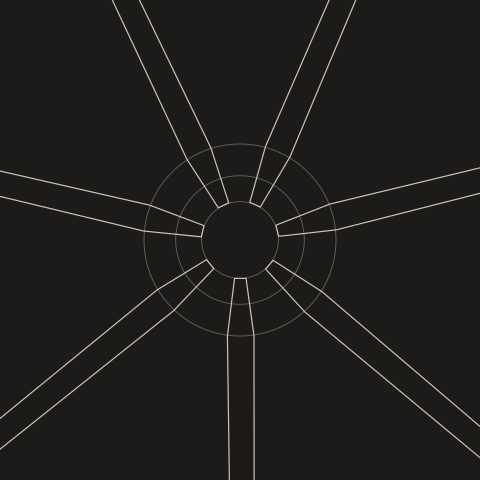
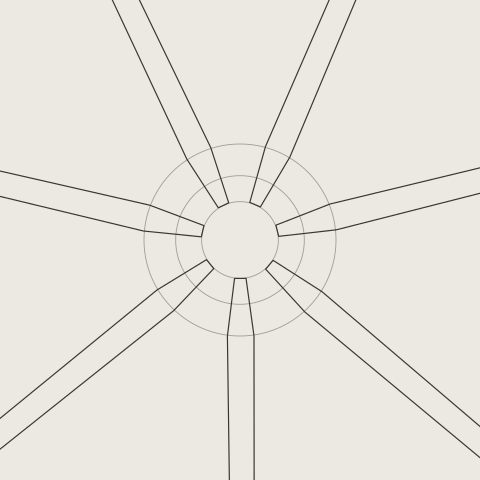
Dounas & Spaeth, 2014
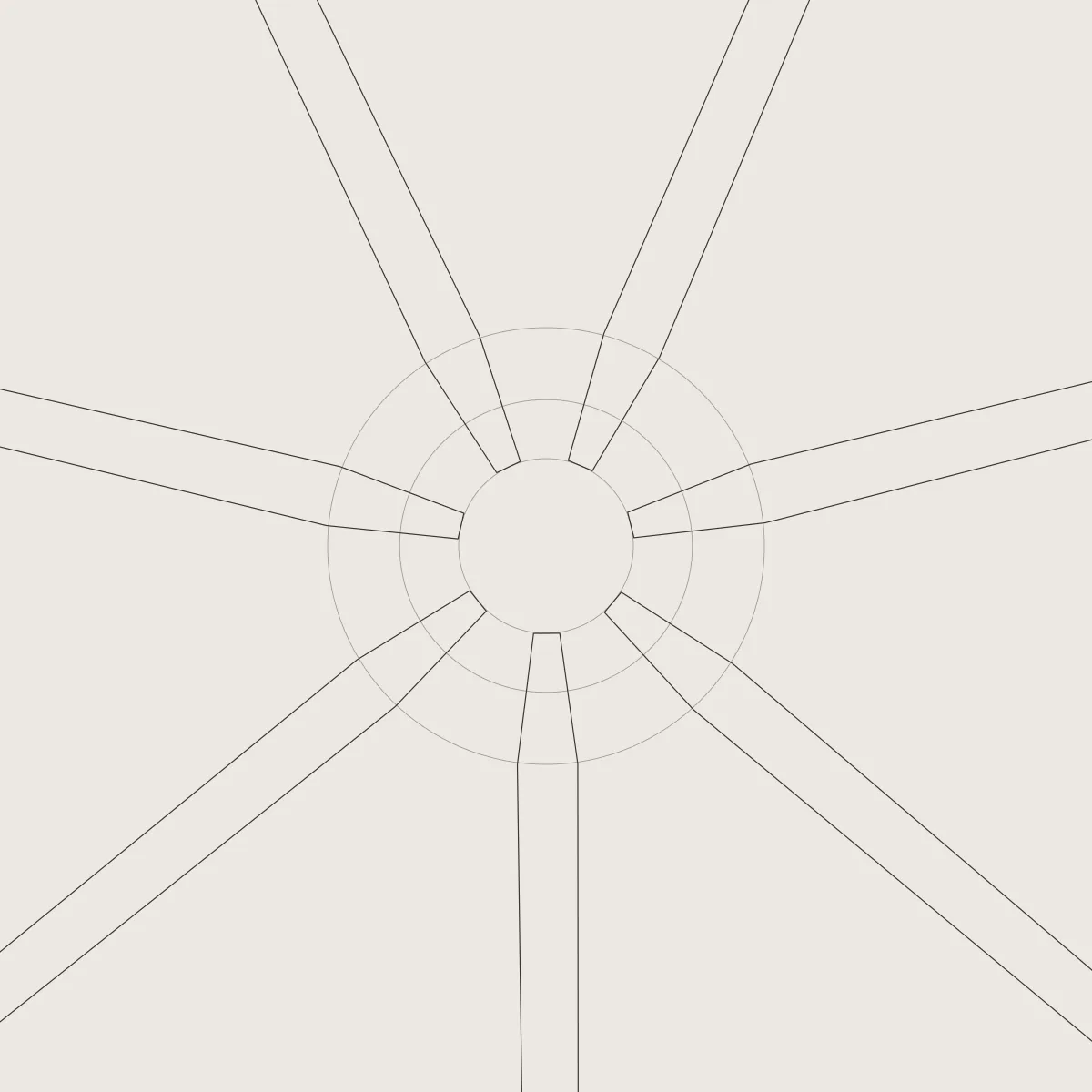
The Universal Dovetail Joint (Dounas & Spaeth, CAADRIA 2014): revolve a trapezoidal pin around its axis and the 2D fastener becomes a concave disk. Timber members can then enter at irregular 3D angles, making a node for a space frame that is not a regular lattice. The faded rings are the revolved profile; the flared keys are the columns.
Spread and seed decide how uneven the compass is. Motion lets the spacing wander, as a joint under load would.
Behind the mathematics
Joint system
Architect and computational designer who co-developed a universal timber joint formed by revolving a dovetail profile.
Joint system
Architect and researcher who co-developed the rotational timber joint represented in this geometric study.