
R. Buckminster Fuller1895–1983
The geodesic dome
American architect and designer who patented the geodesic dome, a sphere approximated by a light lattice of triangles.
A Platonic solid, geodesically subdivided, drawn as 2D line art. Detail is subdivision; turn and tilt choose the view. Far side fades the hidden hemisphere so the solid reads in depth.
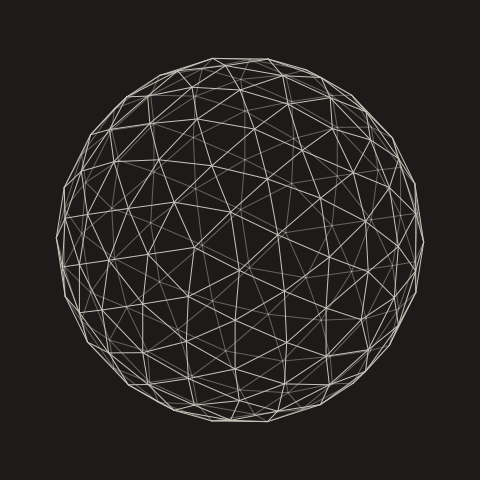
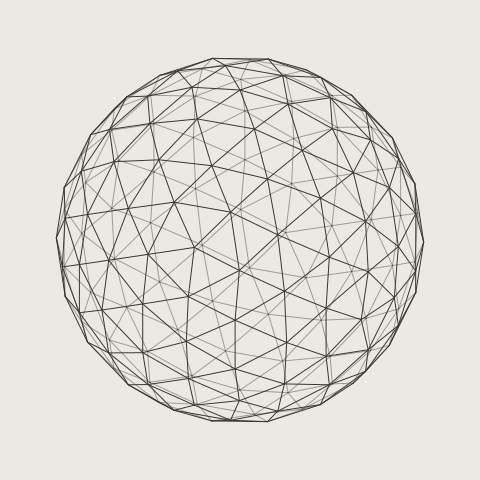
R. Buckminster Fuller's domes · Michael Goldberg, 1937
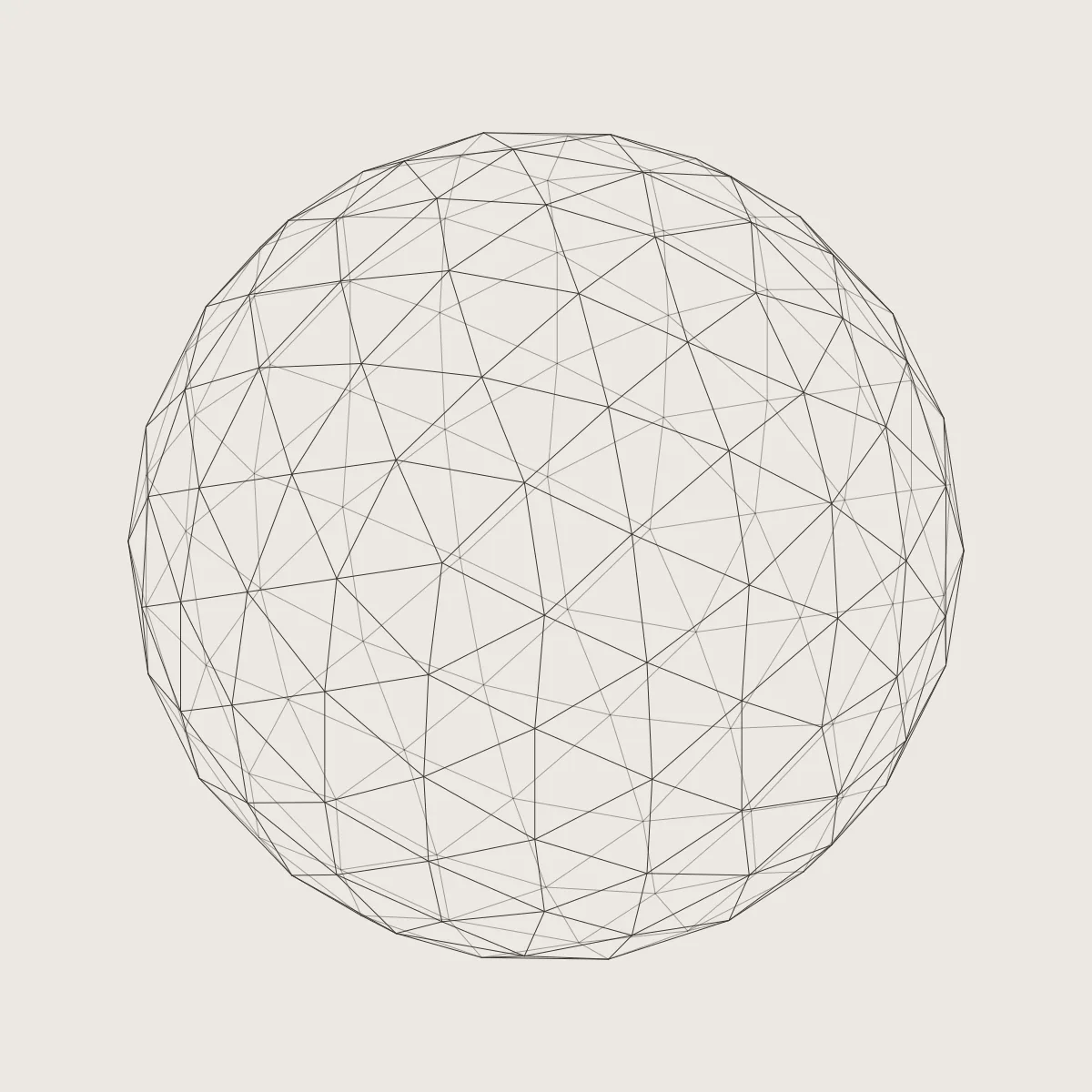
Start from a Platonic solid, subdivide each face toward a sphere, and project the vertices back out. What you see is a 2D line drawing of that mesh: tilt is the view, Far side fades the hidden hemisphere so the solid reads in depth.
Behind the mathematics
The geodesic dome
American architect and designer who patented the geodesic dome, a sphere approximated by a light lattice of triangles.
Goldberg polyhedra, 1937
American mathematician who in 1937 described the family of nearly spherical polyhedra built from hexagons and twelve pentagons.