
Ken Perlin
The noise that shoves each crossing
American computer scientist who invented gradient noise in 1983 and simplex noise in 2001, the smooth randomness behind most generative textures and flow fields.
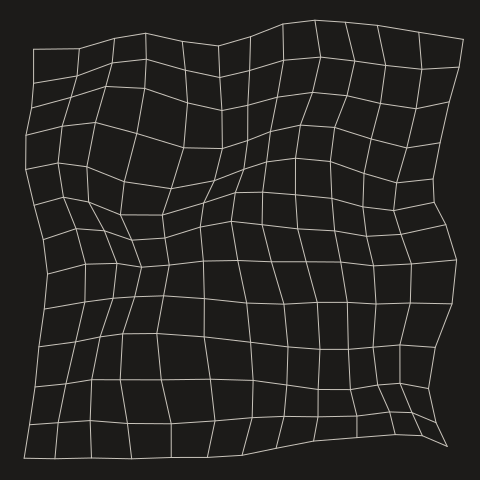
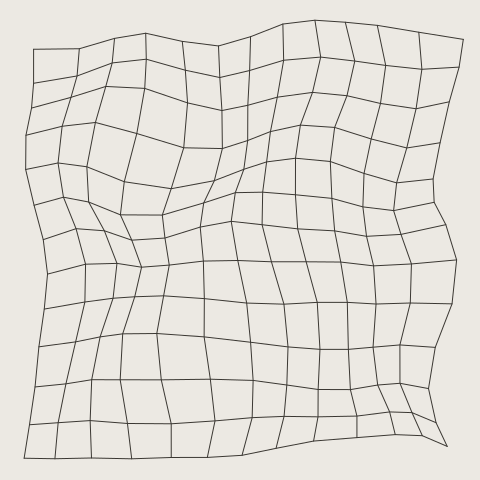
A regular lattice, each vertex shoved by simplex noise. The drawing is the grid’s own edges after the shove: a cloth, not a triangulation of random sites.
Ken Perlin's simplex noise, 2001
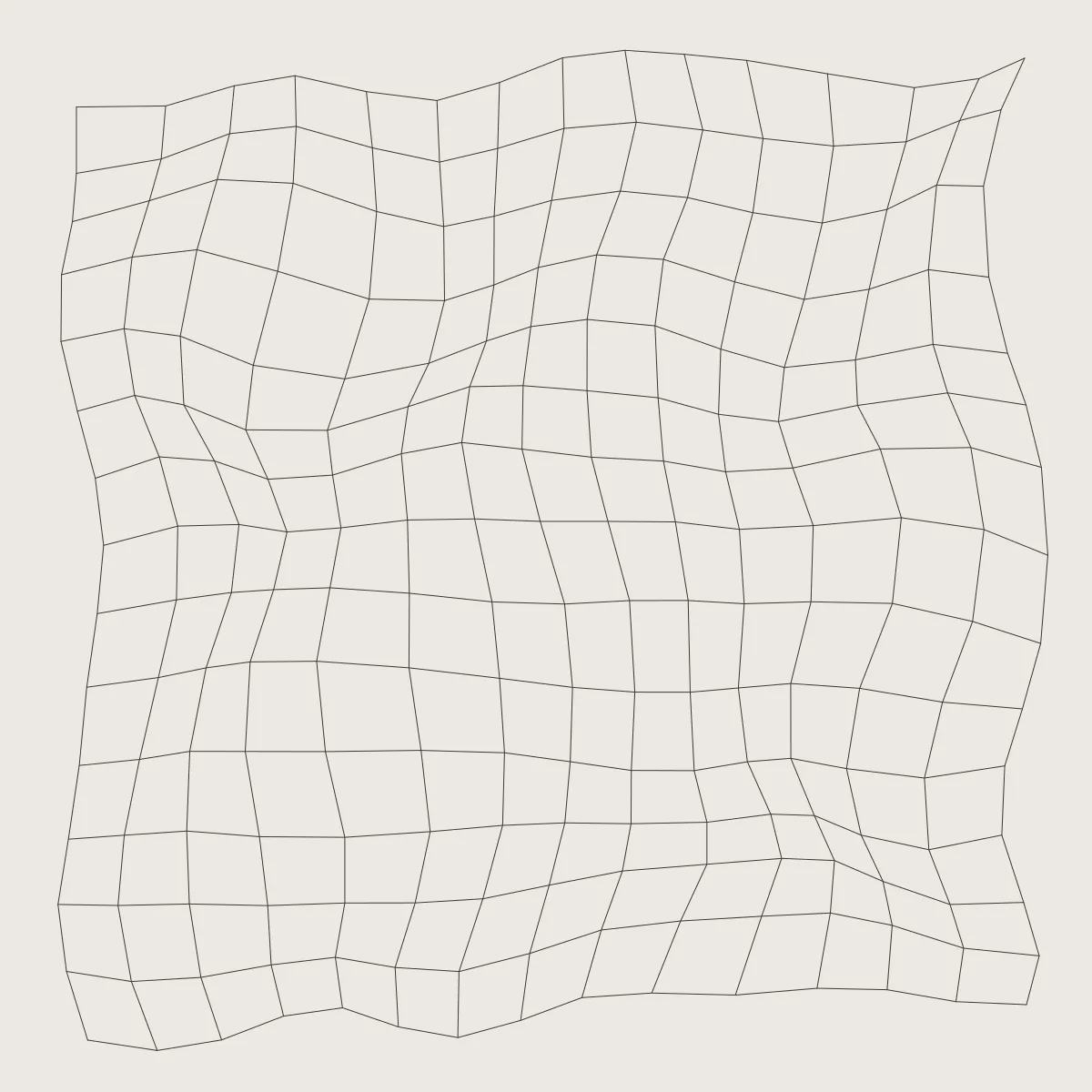
Lay down graph paper, then shove every crossing with simplex noise, a different shove in x and in y, so the sheet buckles like cloth. Warp is how far a vertex may travel, in units of one cell; scale is how fast the shove turns from neighbour to neighbour. Distinct from Delaunay Mesh: the connectivity stays the regular lattice. Distinct from Noise Field: both directions are drawn, so you get a mesh, not a hatch.
Behind the mathematics
The noise that shoves each crossing
American computer scientist who invented gradient noise in 1983 and simplex noise in 2001, the smooth randomness behind most generative textures and flow fields.