
Stephen Wolframborn 1959
Elementary rules
British-American physicist and computer scientist who catalogued the elementary cellular automata and showed that rules of almost no complexity can produce behaviour of almost any complexity.
One row of cells, one rule, and the row below follows from the three cells above it. Eight bits of instruction are enough to produce order, chaos or something that does both at once.
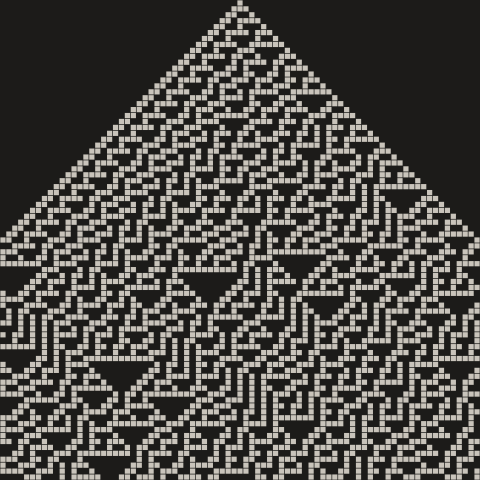
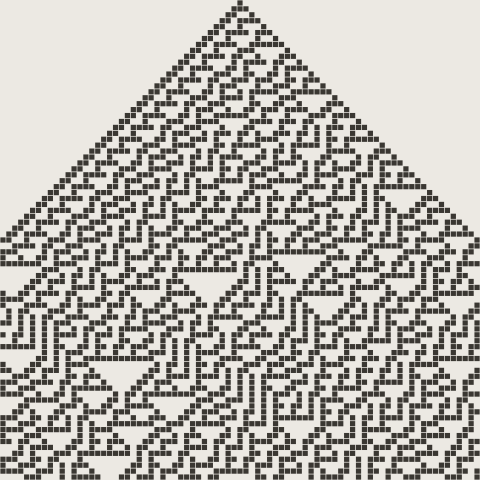
Stephen Wolfram · elementary cellular automata
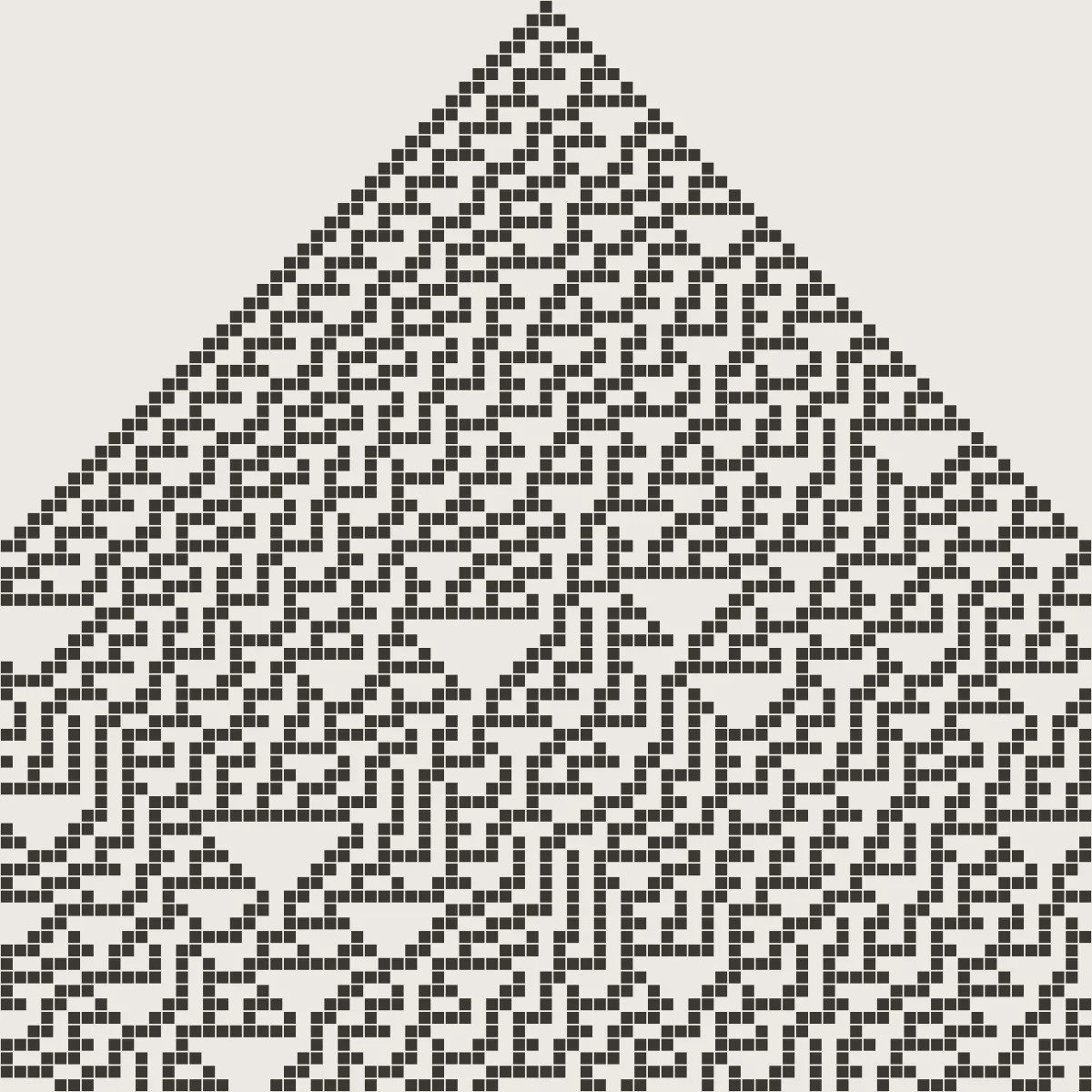
Each cell reads itself and its two neighbours, which gives eight possible neighbourhoods; a rule number is simply which of those eight turn the cell on, written in binary. Rule 90 draws a Sierpiński triangle, rule 30 is disordered enough to have been used as a random source, and rule 110 is capable of universal computation: in principle it can run any program. The row wraps at both edges, so the left and right sides are neighbours.
Behind the mathematics
Elementary rules
British-American physicist and computer scientist who catalogued the elementary cellular automata and showed that rules of almost no complexity can produce behaviour of almost any complexity.