
John Horton Conway1937–2020
Invented the game, 1970
English mathematician who invented the Game of Life, and with Coxeter discovered the number friezes that close up by a single rule, and with Charles Radin the pinwheel tiling.
A grid of cells living and dying by three rules. Fading trails show where things were going: gliders streaming from Gosper's gun, or five cells that churn for a thousand turns.
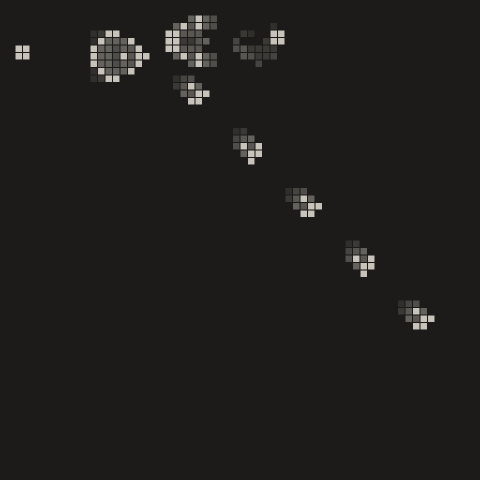
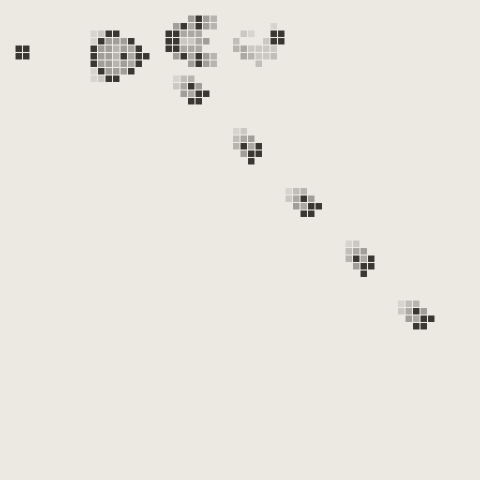
John Horton Conway, 1970 · Bill Gosper's glider gun, 1970
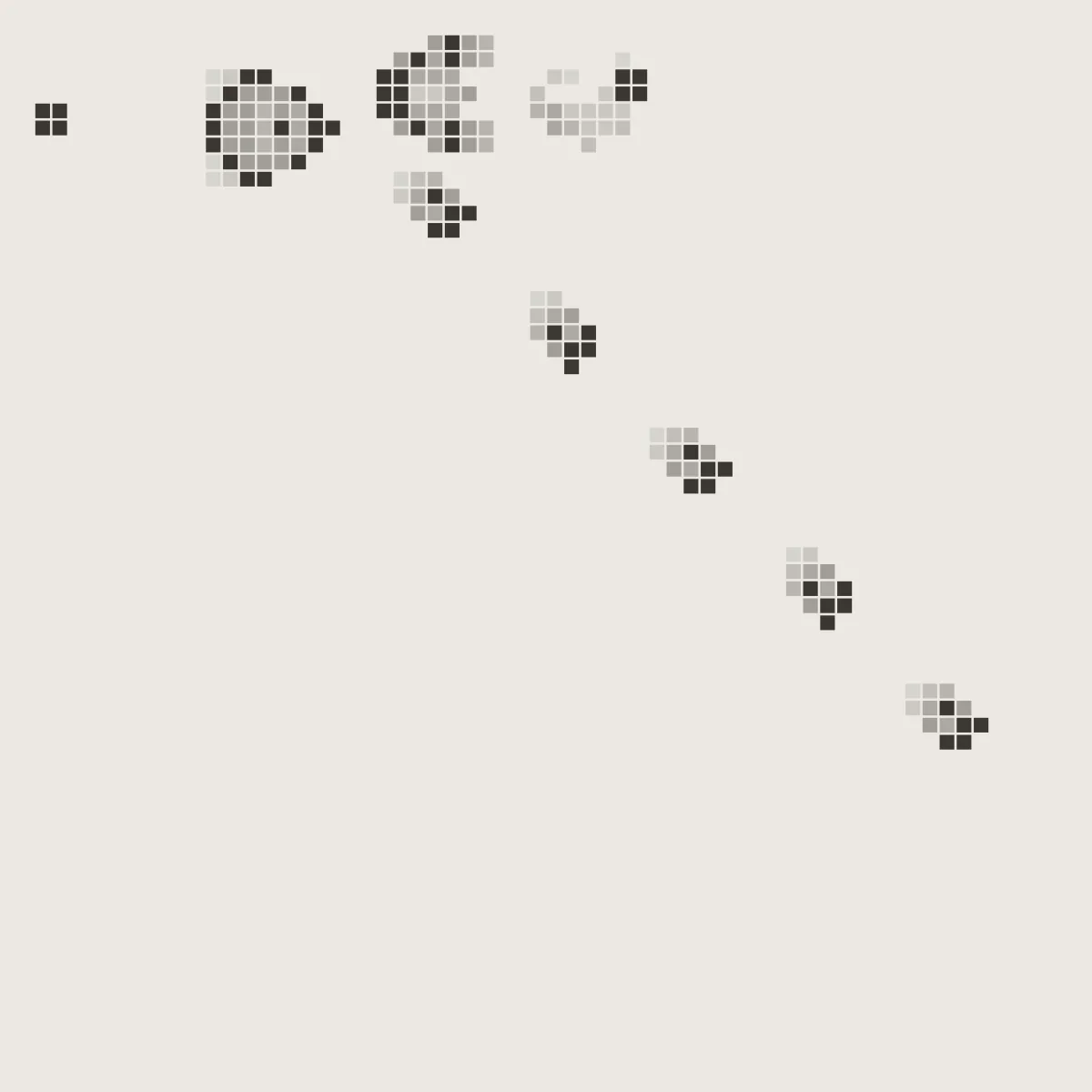
John Horton Conway devised the game in 1970 and Martin Gardner published it that October. Each turn, a live cell with two or three live neighbours survives, an empty cell with exactly three comes to life, and everything else is empty next turn. From that, patterns walk, breed and die. Conway offered a prize for a pattern that grows forever, and within weeks Bill Gosper's group at MIT built the glider gun, which fires a glider every thirty turns without end.
Five cells, the R-pentomino, take 1103 turns to settle; the diehard vanishes after exactly 130. Here the board runs on past the edges of the sheet, and each cell that has just died leaves a trail that fades over a few turns, so a still frame keeps the motion.
Behind the mathematics
Invented the game, 1970
English mathematician who invented the Game of Life, and with Coxeter discovered the number friezes that close up by a single rule, and with Charles Radin the pinwheel tiling.
The glider gun, 1970
American mathematician and early hacker whose flowsnake curve fills a hexagonal territory with one continuous, non-crossing line.
