
Sébastien Truchet1657–1729
Square-tile rotation system
French mathematician whose 1704 study showed how rotations of one divided square could generate remarkably varied ornamental fields.
Truchet's tiles, but each square may break into four smaller ones before it decides which way to turn. Arcs still meet at every edge midpoint, so coarse and fine areas join without a break.


Sébastien Truchet, 1704 · recursive subdivision
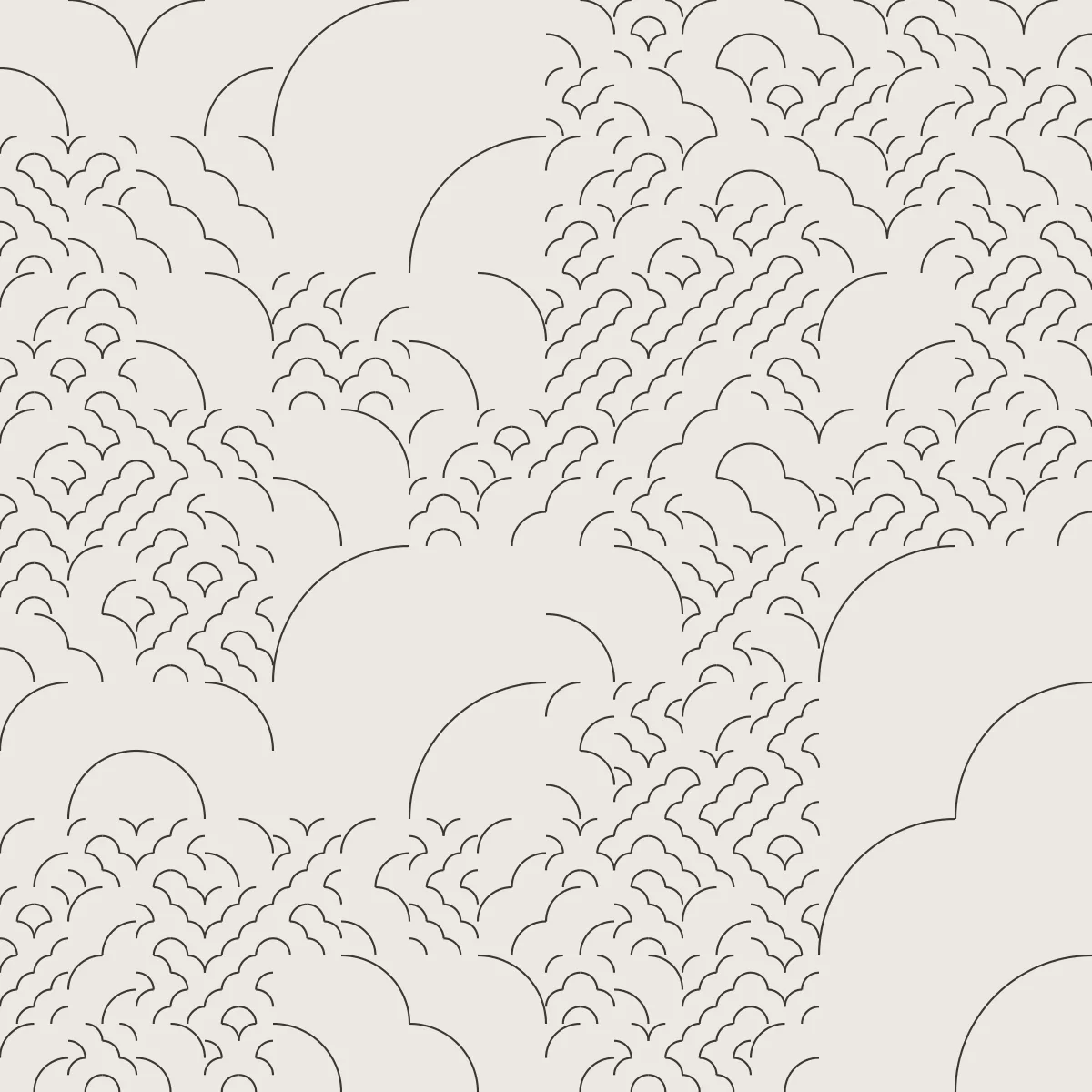
The arcs of a Truchet tile always touch the midpoint of all four edges, and that holds whatever size the tile is, so a cell can be quartered and its neighbours never notice. Recursing on that gives a field that is dense in some places and open in others while remaining one continuous maze. Split is the chance that any given square divides rather than settles.
Behind the mathematics
Square-tile rotation system
French mathematician whose 1704 study showed how rotations of one divided square could generate remarkably varied ornamental fields.