John Heighway
Discovered the curve by paper folding, 1966
American physicist at NASA who, with Bruce Banks and William Harter, discovered the dragon curve by folding a strip of paper in half again and again.
One strip of paper folded in half the same way over and over, then opened out to right angles. It never crosses itself.
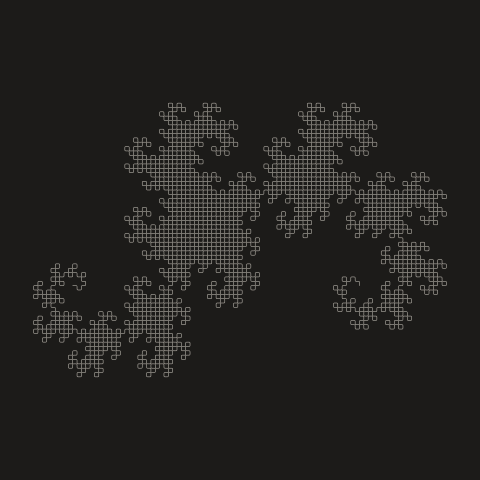
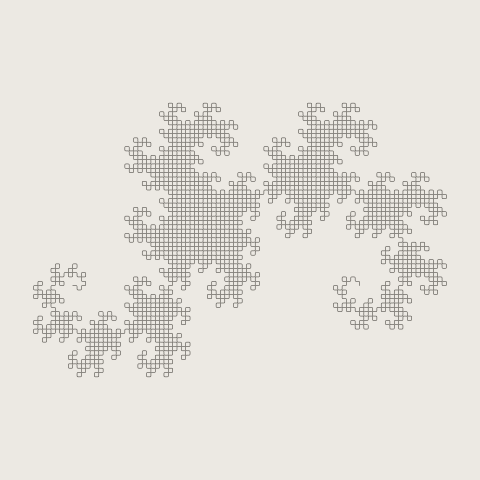
John Heighway, Bruce Banks and William Harter, 1966 · NASA
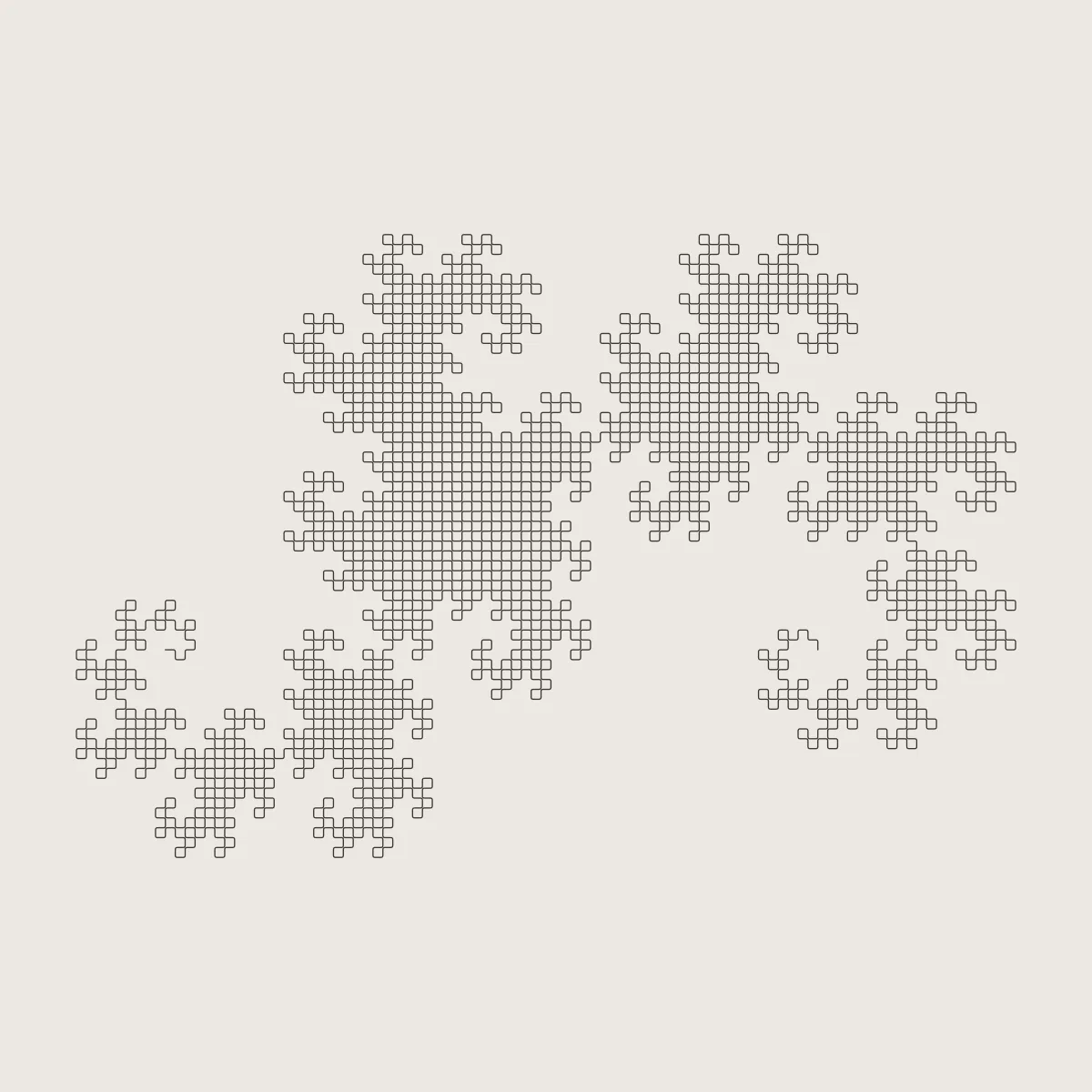
Three physicists at NASA folded a strip of paper repeatedly, opened every crease to a right angle, and found the boundary of something that tiles the plane. The turn at any crease is decided by arithmetic: take the step number, isolate its lowest set bit, and look at the bit above it. That single test, run over every step, produces a path of hundreds of thousands of segments that touches itself everywhere and crosses itself nowhere.
Behind the mathematics
Discovered the curve by paper folding, 1966
American physicist at NASA who, with Bruce Banks and William Harter, discovered the dragon curve by folding a strip of paper in half again and again.
Co-discoverer
NASA physicist who helped discover the Heighway dragon, the curve traced by the creases of a repeatedly folded strip.
Co-discoverer
NASA physicist who helped discover the Heighway dragon and studied its self-similar folds.