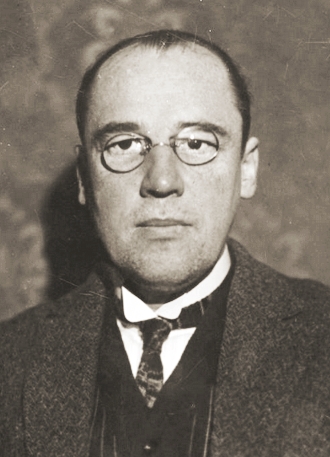
Karl Menger1902–1985
The sponge, 1926
Austrian-American mathematician who in 1926 described the sponge made by carving every cube into twenty-seven and removing the centres, again and again.
A cube whose three visible faces have had their middles removed, and the middles of what is left, and so on.
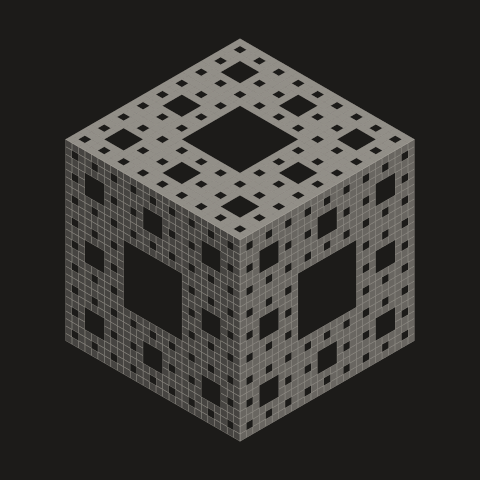
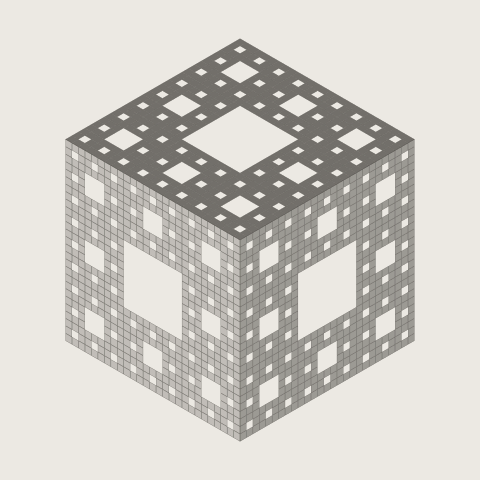
Karl Menger, 1926 · Sierpiński carpet on a solid
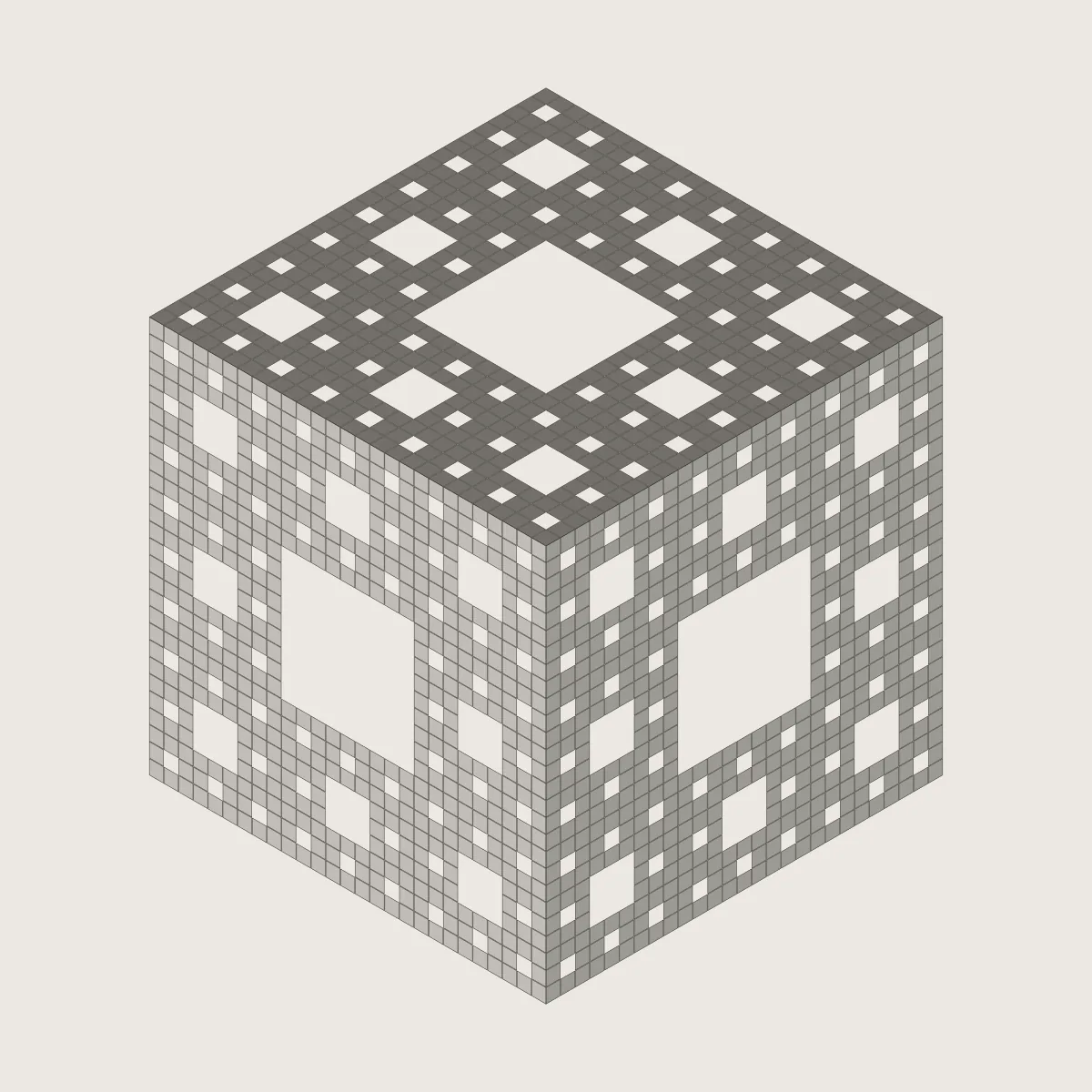
Menger's sponge takes a cube, removes the middle of every face and the core, and repeats. Seen from a corner, the three faces that show are each a Sierpiński carpet, so the solid can be drawn without ever computing it: carpets on rhombi, one tone per direction. At the fourth step the faces hold over six thousand squares and the surface area is still climbing while the volume falls toward nothing.
Behind the mathematics
The sponge, 1926
Austrian-American mathematician who in 1926 described the sponge made by carving every cube into twenty-seven and removing the centres, again and again.
Self-similar removal
Polish mathematician who worked across set theory, number theory and topology, and whose triangle, carpet and curves became standard examples of self-similar sets.