Rafi Bistritzer
Moiré band theory
Physicist who, with Allan MacDonald, worked out the moiré band structure of twisted bilayer graphene and predicted the angles at which its bands go flat.
Two identical honeycomb sheets, one turned by a degree or so. Their mismatch builds a second lattice hundreds of times larger than either, and near 1.1° that superlattice is where the physics happens.
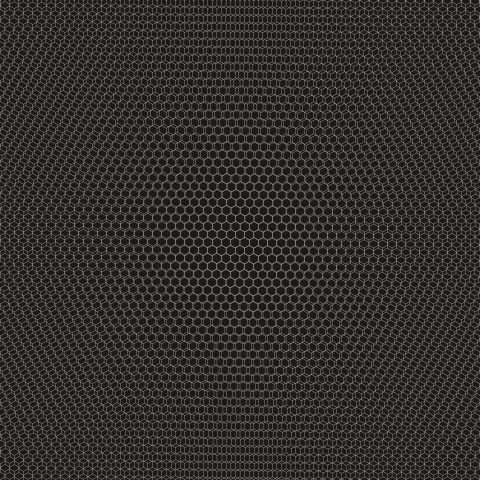
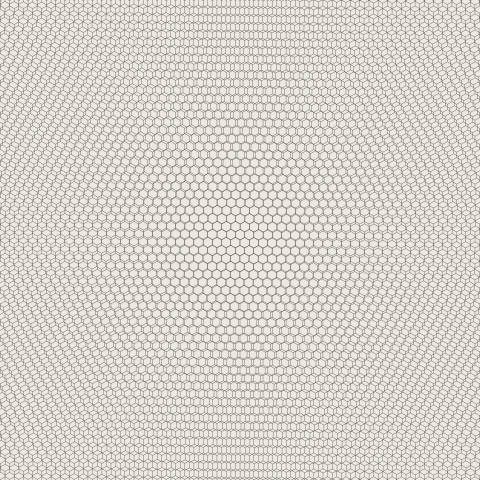
Twisted bilayer graphene · Bistritzer and MacDonald, 2011
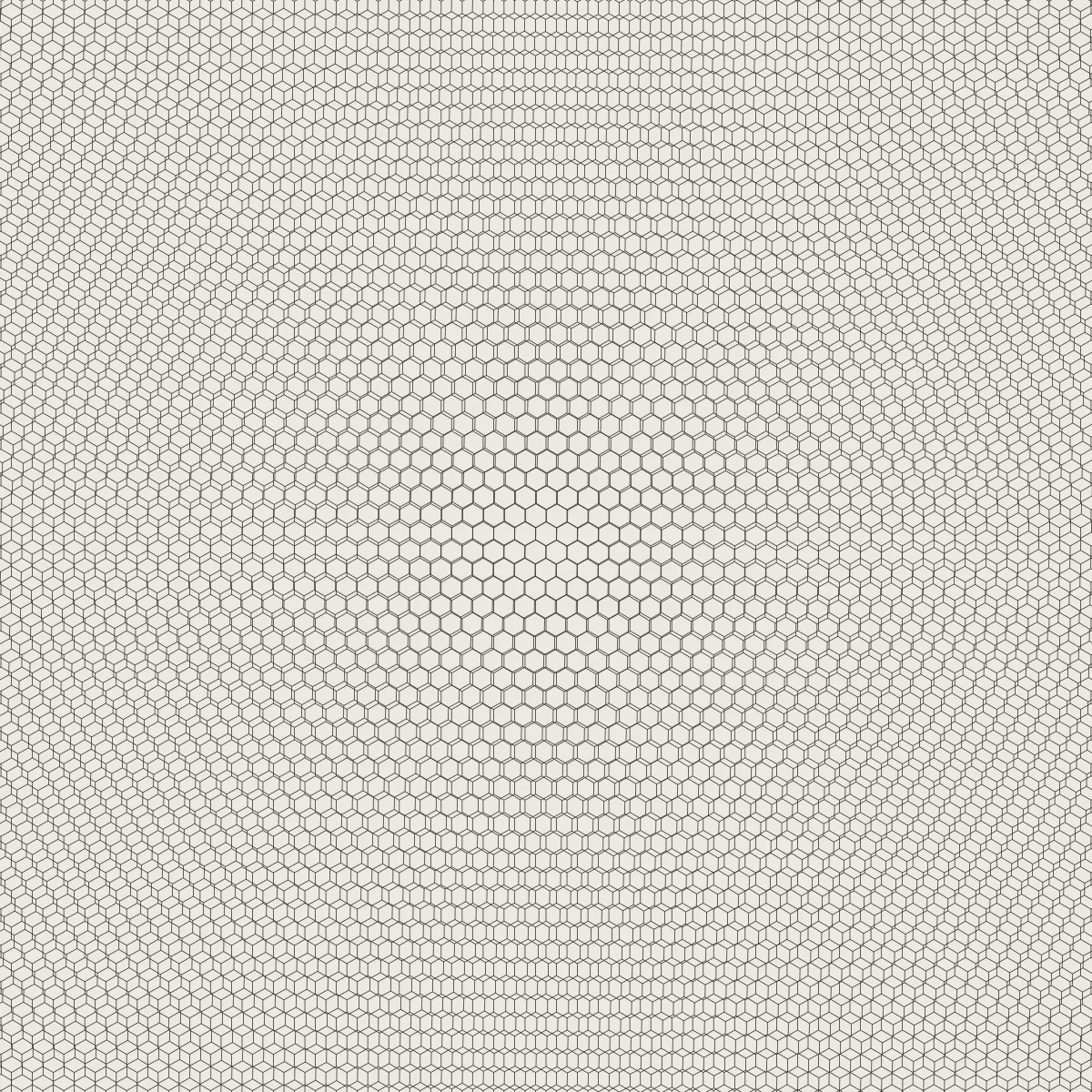
Twisting one layer by θ displaces it locally by (R(θ) − I)·r, and the layers fall back into register wherever that displacement reaches a lattice vector. The result is a triangular moiré lattice of period a ⁄ (2·sin(θ/2)), about 52 lattice constants at 1.1°, which is why the drawing has to be magnified so far to hold one cell.
The geometry alone is scale-free: the picture at 1.1° is the picture at 11°, ten times larger. What singles out 1.1° is electronic, not geometric: at that angle the moiré bands flatten almost to zero width, and twisted bilayer graphene becomes a correlated insulator and a superconductor. This draws the lattice that sets it up, not the bands themselves.
Behind the mathematics
Moiré band theory
Physicist who, with Allan MacDonald, worked out the moiré band structure of twisted bilayer graphene and predicted the angles at which its bands go flat.
Magic-angle prediction
Canadian-American condensed-matter theorist whose 2011 prediction of a magic twist angle near 1.1° anticipated the correlated and superconducting states later found in twisted bilayer graphene.
