
Henry Fox Talbot1800–1877
Screens that turn tone into dots, 1852
English inventor of the calotype who patented the ruled screen that lets a printing press render continuous tone as varying dot area.
One dot per cell, sized by a surface nobody drew. The grid is dead flat and the sheet rolls like beaten metal.
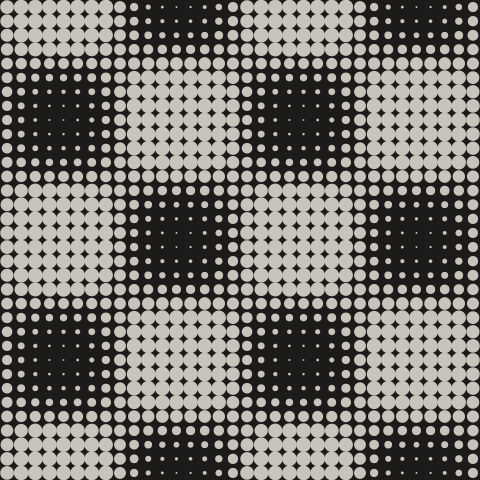
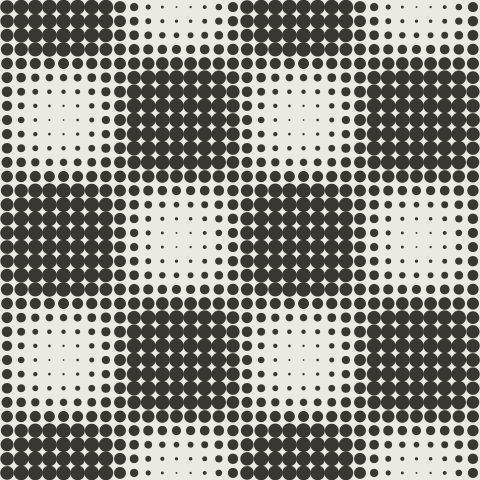
Halftone as a surface · dot gain and shading
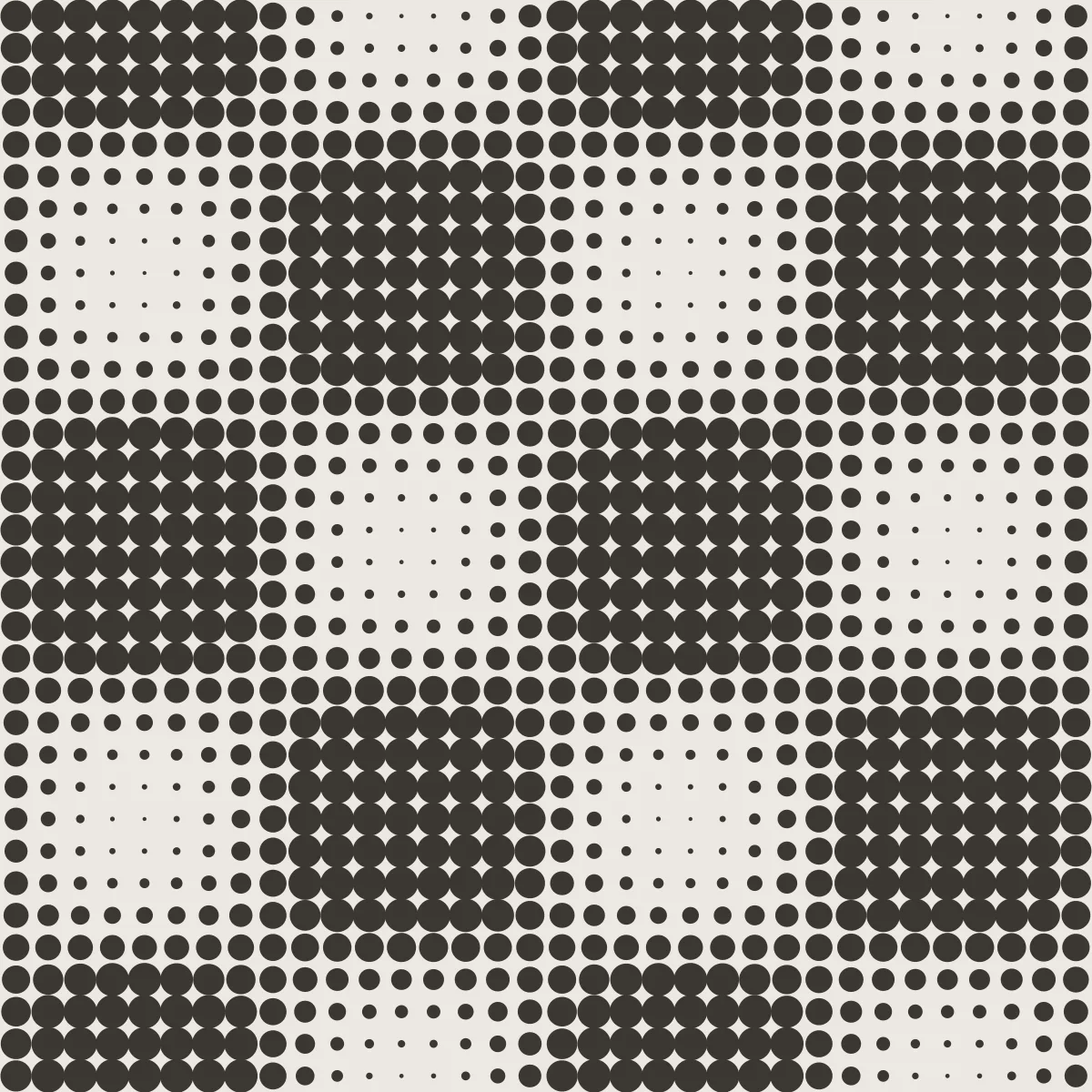
Every dot sits exactly on its lattice point; the only thing that varies is how big it is. That is enough, because tone is read before position: a run of swelling dots is taken as a surface turning toward the light long before the eye counts anything. The height field is made of sines that complete a whole number of cycles across the sheet, so the relief continues through every edge.
Behind the mathematics
Screens that turn tone into dots, 1852
English inventor of the calotype who patented the ruled screen that lets a printing press render continuous tone as varying dot area.