
Ernest Hanbury Hankin1865–1939
Polygons-in-contact method
British bacteriologist in India who reverse-engineered the hidden polygonal scaffolding behind Islamic star patterns and published the polygons-in-contact method.
Islamic star patterns drawn the way the craftsmen did: lines leave the midpoint of every tile edge at one fixed angle and run until they meet. One slider changes the order of every star at once.


Ernest Hanbury Hankin · polygons in contact
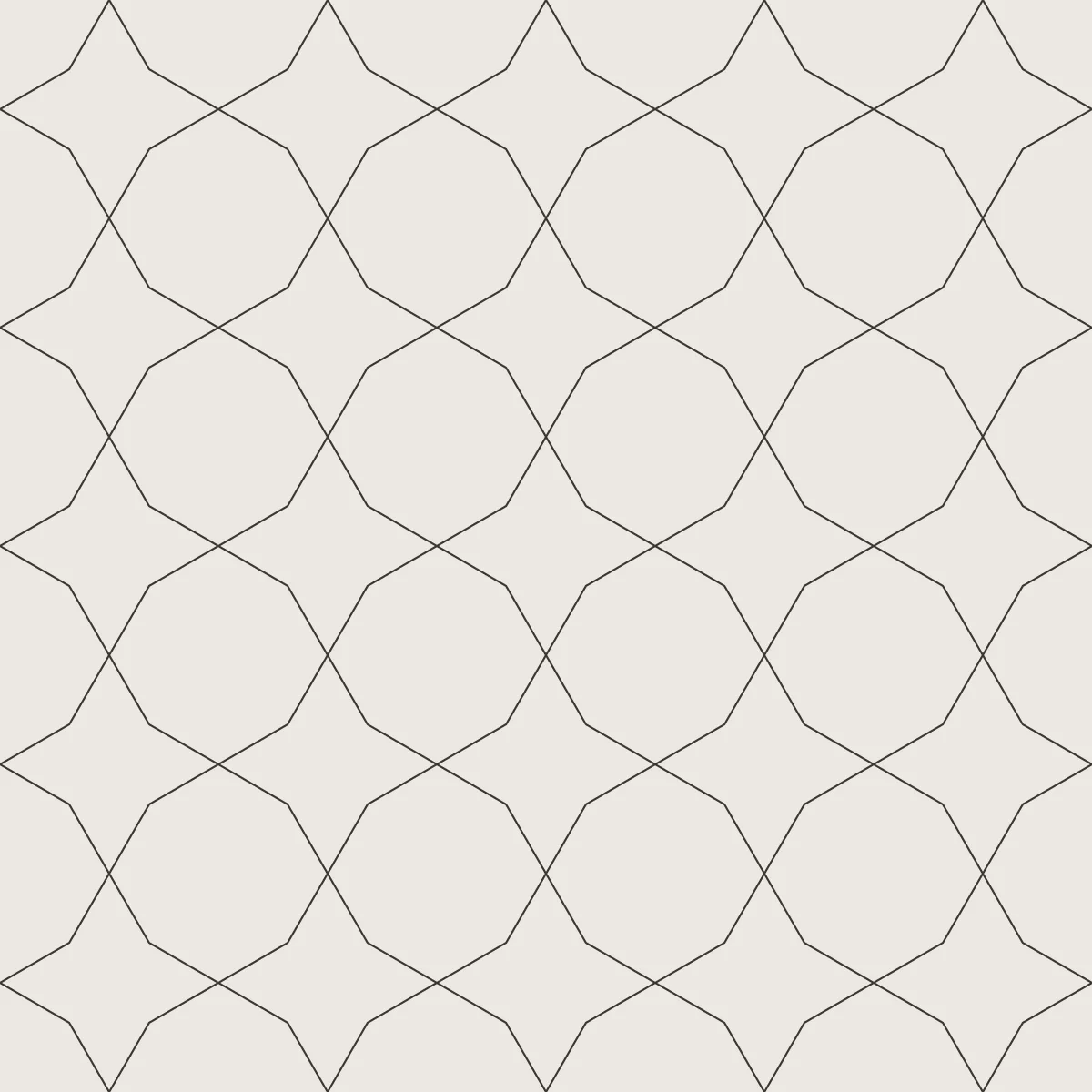
Hankin, working in India in the 1900s, noticed that the star patterns were laid out over a hidden tiling of regular polygons. From each edge midpoint two lines leave at the same contact angle and continue until they strike another. Because neighbouring tiles share midpoints, the lines cross the joins uninterrupted and the underlying scaffolding disappears. The angle sets the star's order; the tiling sets which stars are possible.
Behind the mathematics
Polygons-in-contact method
British bacteriologist in India who reverse-engineered the hidden polygonal scaffolding behind Islamic star patterns and published the polygons-in-contact method.