
Leonhard Euler1707–1783
Found the catenoid, 1744
Swiss mathematician who in 1744 found the catenoid, the surface made by spinning a hanging chain, and showed it encloses the least area between two rings.
A quiet hourglass built from circular contours. Its waist opens into the minimal surface formed by a suspended soap film.
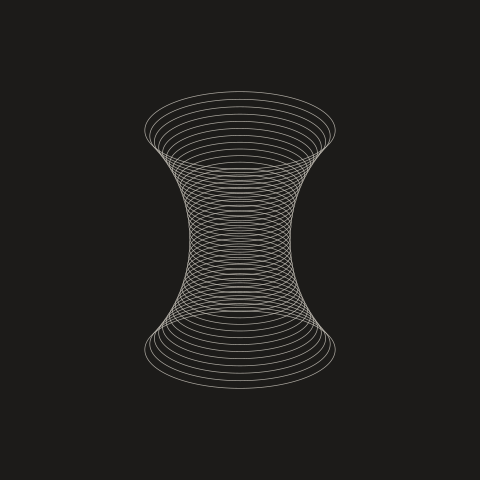
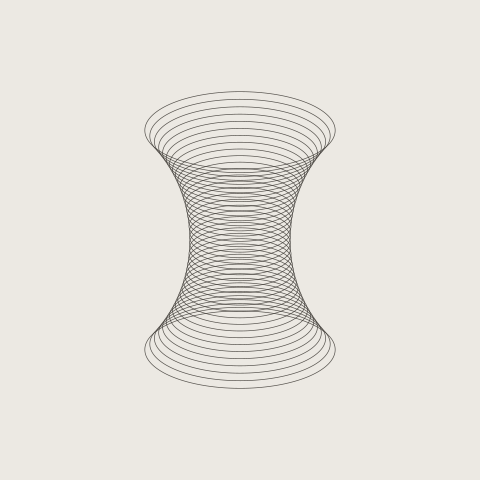
Leonhard Euler, 1744 · Jean Baptiste Meusnier, 1776
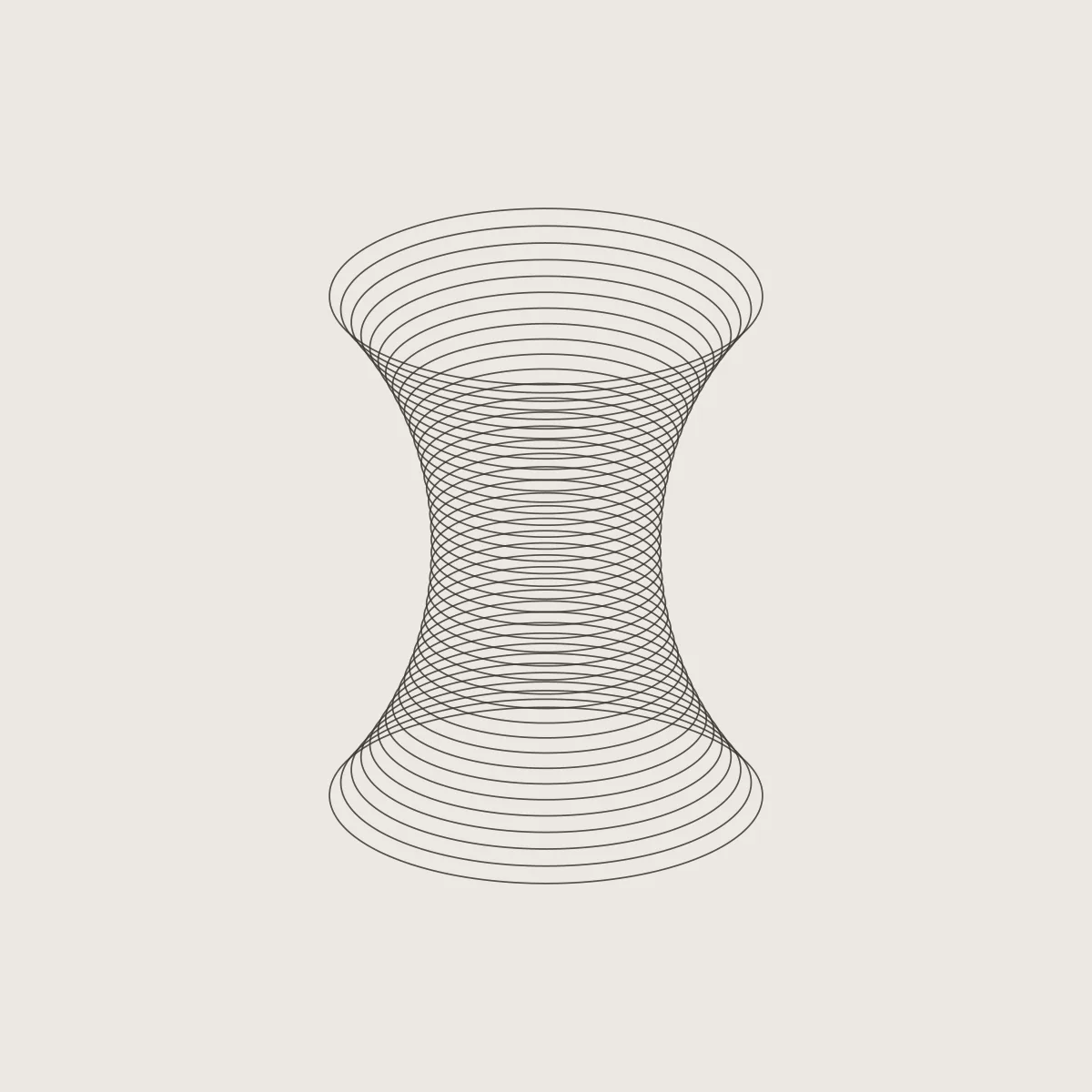
An original parametric line study. Density controls the number of traces, form changes their geometry, and turn and tilt choose the projection. Motion follows a closed twenty-four-second cycle; the selected frame is preserved in saved drawings and exports.
Behind the mathematics
Found the catenoid, 1744
Swiss mathematician who in 1744 found the catenoid, the surface made by spinning a hanging chain, and showed it encloses the least area between two rings.
Proved it minimal, 1776
French mathematician and engineer who showed in 1776 that the helicoid and the catenoid are minimal surfaces, the shapes a soap film settles into.
