Form · Line density · Turn
Three-dimensional forms drawn in line: minimal surfaces, polyhedra, knots and isometric cities. Some can be turned by dragging, and every view exports as a flat vector drawing.
Form · Line density · Turn
Form · Line density · Turn
Form · Line density · Turn
Form · Line density · Turn
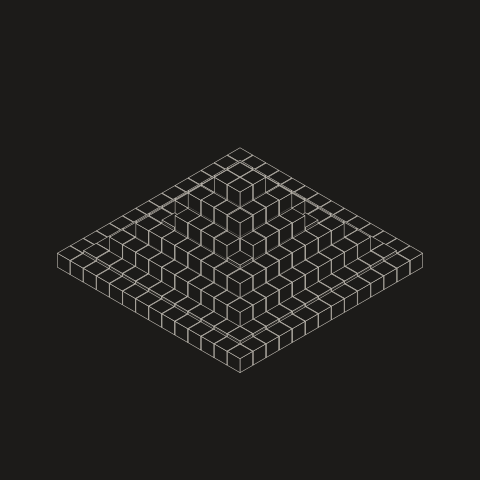
Landscape · Blocks across · Relief
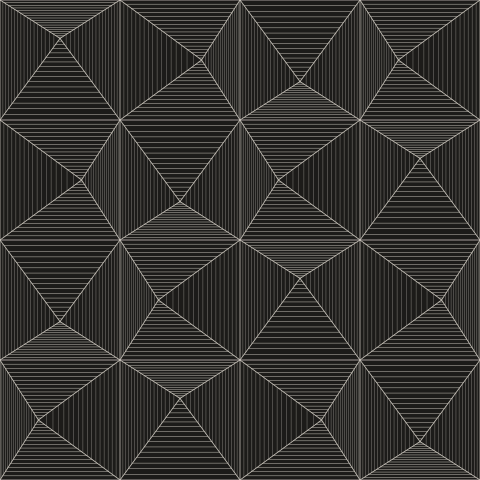
Repeat scale · Relief · Facet lines
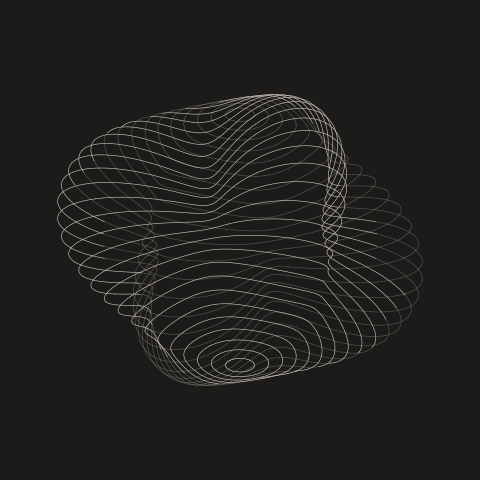
Lobes · Relief · Contours
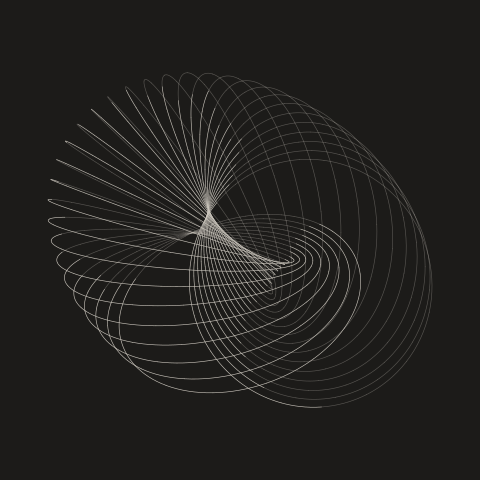
Fibres · Latitude · Spread
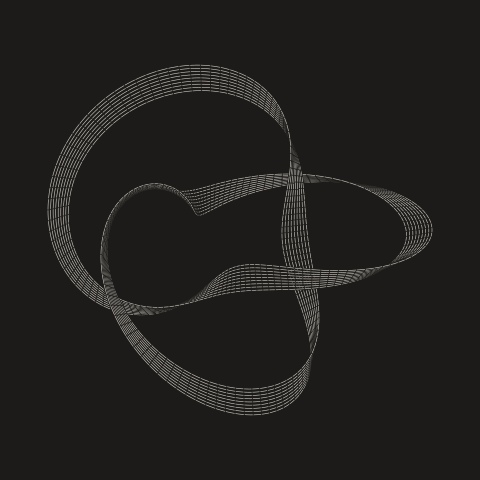
Knot · Strands · Strand spacing
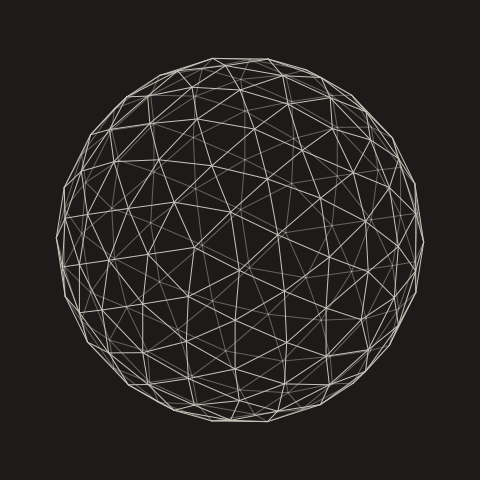
Solid · Detail · Turn
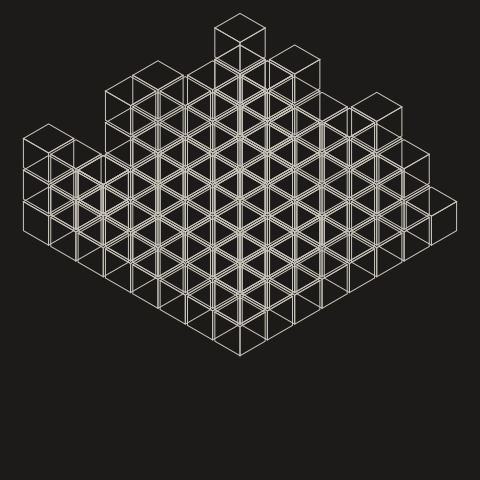
Columns · Height

Columns · Shade · Tumble
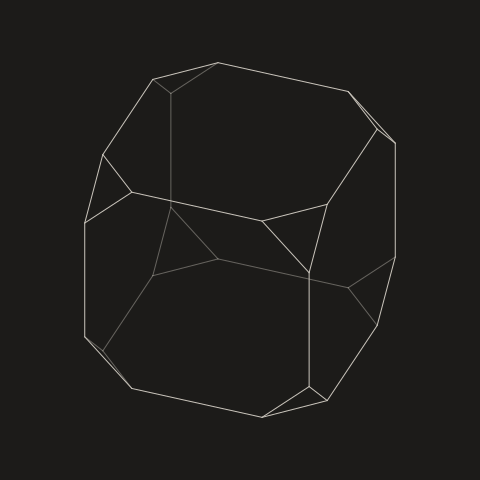
Solid · Amount · Rounds
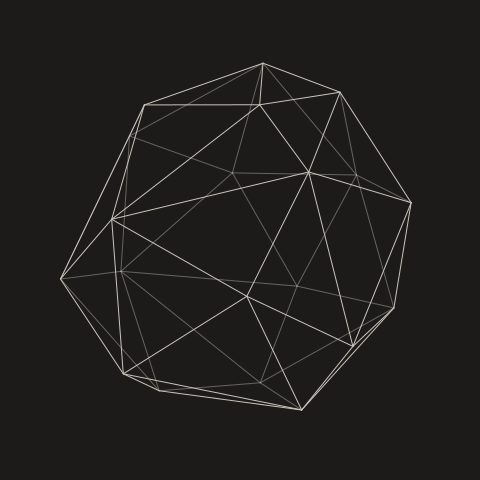
Vertices · Jitter · Turn
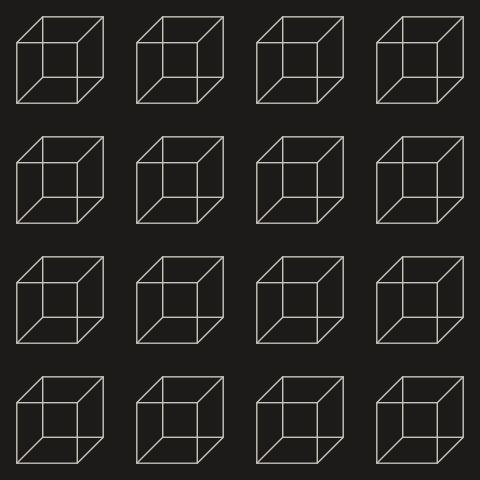
Columns · Depth offset · Weight
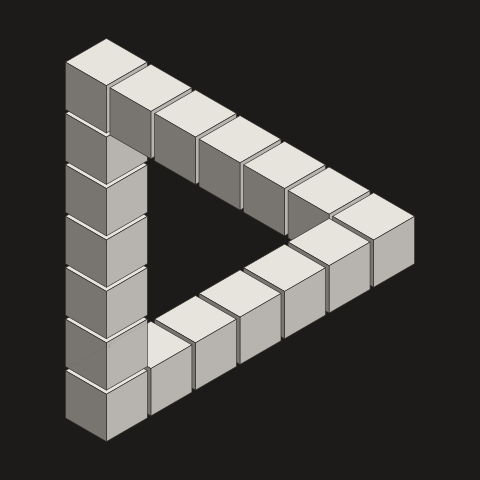
Arm length · Built from · Cube size
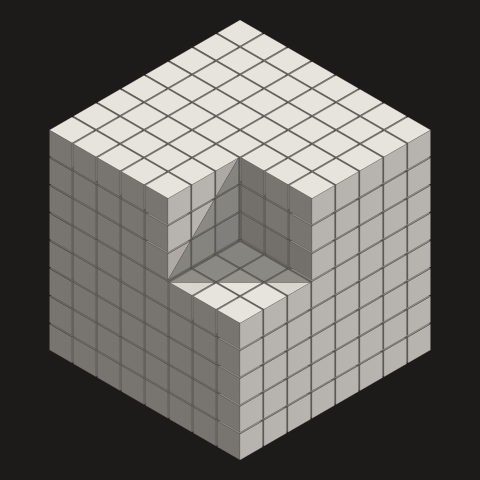
Cubes a side · Taken out · Pile size
Blocks across · Joint · Contrast
Depth · Weight · Face contrast
Bend · Lines · Turns
Rings · Strings · Twist
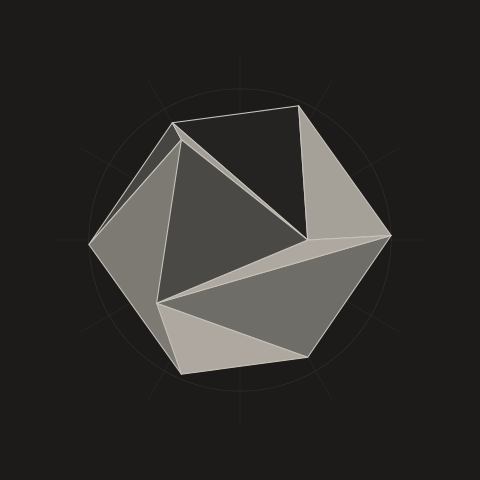
Fold · Turn · Tilt

Arrangement · Length · Size
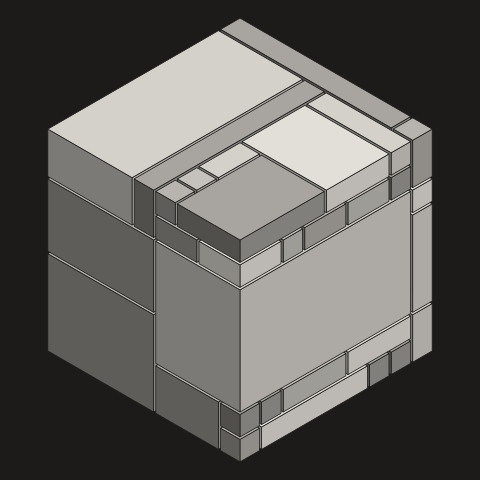
Cubes across · Grid in each cube · Spacing

Blocks across · Density · Height
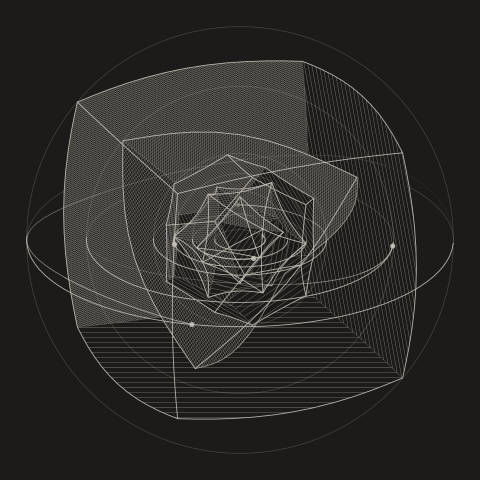
Solids, from the Sun out · Evened out · Drawn as
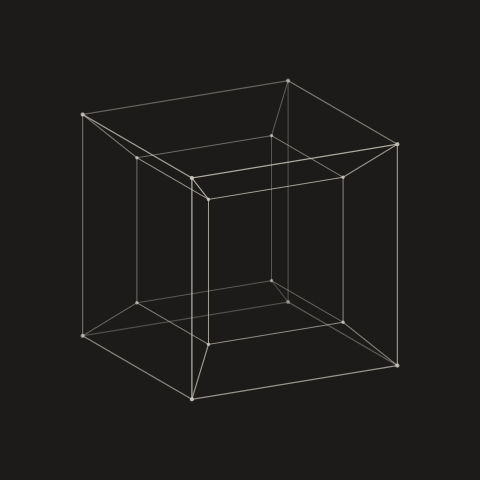
Polytope · Turning · Fourth-axis turn
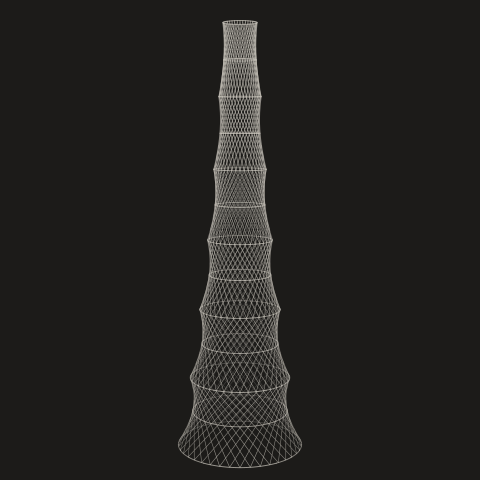
Sections · Lines each way · Lean
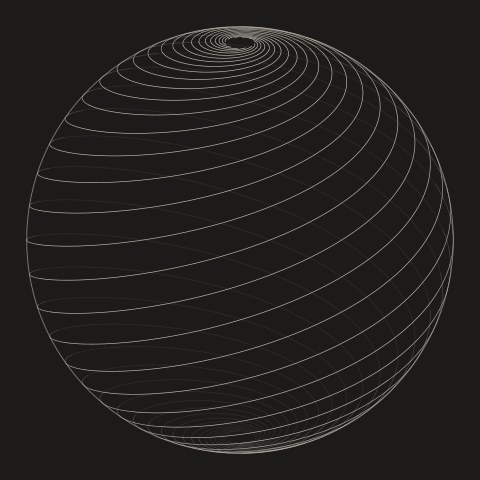
View · Lines · Bearing from north
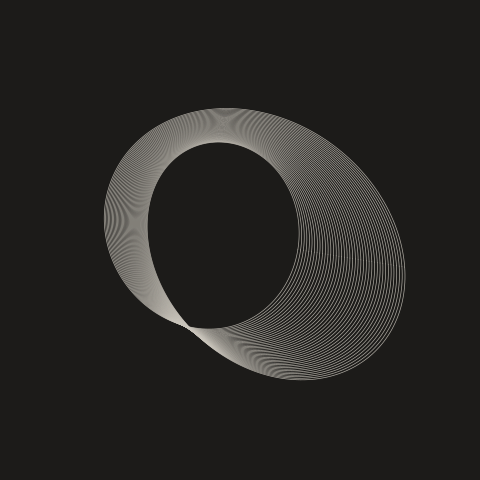
Parallel strands trace a band with a half twist. One continuous surface turns inside out as you orbit its woven form.
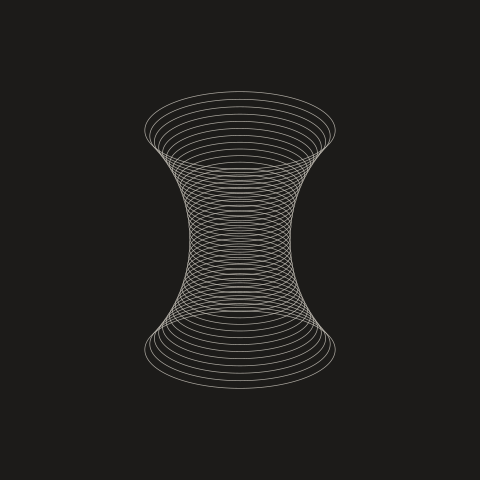
A quiet hourglass built from circular contours. Its waist opens into the minimal surface formed by a suspended soap film.
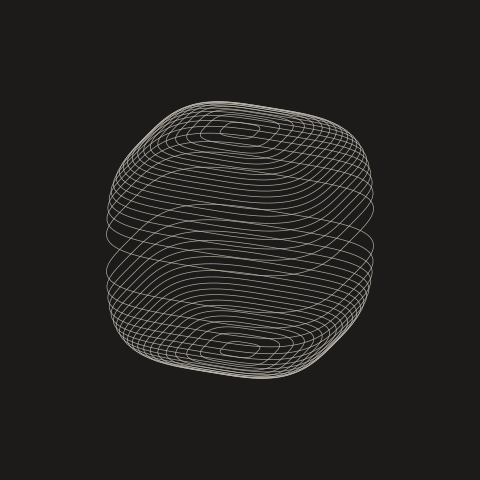
A rounded cube softens into a sphere and pinches into a faceted jewel. Continuous contours expose the changing silhouette.
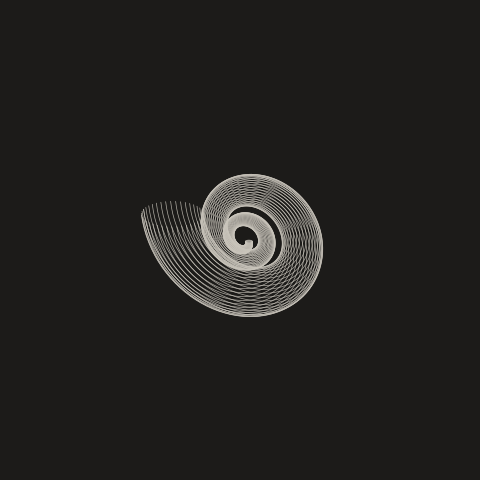
Fine ribs follow an expanding spiral tube. Exponential growth draws a sculptural shell from a compact mathematical rule.
A landscape built from isometric blocks. Stepped hills, hollow craters and travelling waves turn a square lattice into sculptural linework.
Fine ruled facets turn a tiled surface into a field of raised diamonds. Peaks rise, flatten and invert in a slow travelling wave.
A spherical harmonic pushes a sphere into lobes. Latitude contours describe its surface like topographic lines wrapped around a sculpture.
Circles from a four-dimensional sphere project into a linked bundle. Every pair is linked once; a chosen band of fibres becomes a flowing, hollow sculpture.
A closed curve winds around a torus in two directions. Parallel strands make a sculptural ribbon; small breaks at crossings reveal which strands pass in front.
A Platonic solid, geodesically subdivided, drawn as 2D line art. Detail is subdivision; turn and tilt choose the view. Far side fades the hidden hemisphere so the solid reads in depth.
An isometric cube lattice. Height is rolled per cell from the seed, so the grid reads as a scattered city of boxes.
A rhombille tiling: each hexagon is three rhombi, and the sheet reads as a stack of cubes.
A Platonic seed, truncated toward rectification, then truncated again. Amount is how far each cut goes; rounds is how many times the solid eats itself.
A convex hull of seeded points on a sphere. Every face is a triangle, none of them regular. Count is how many vertices; jitter breaks the even packing.
A field of wireframe cubes with nothing to say which face is nearer. Stare, and the whole field turns inside out at once.
Three arms of cubes, each turning a square corner on the last, arriving back where they began. Follow any arm and it is ordinary.
A cube of small cubes with a pile taken out of its corner, lit by a low sun. Every pile that fits is a plane partition, and seen from the corner each one tiles a hexagon with rhombi.
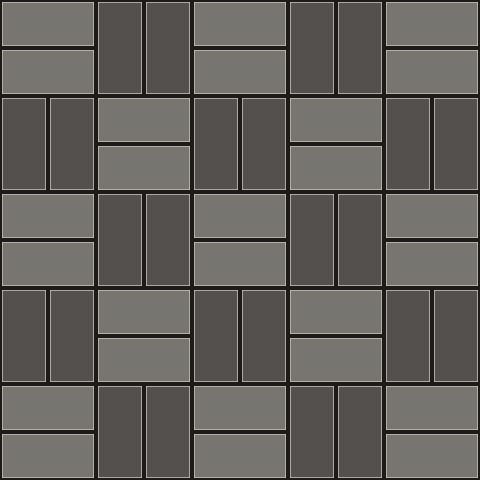
Pairs of planks laid at right angles, turn and turn about. Flat on the page, and it will not stop going over and under.
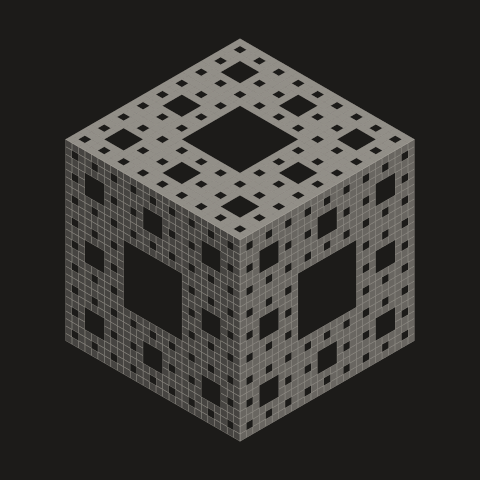
A cube whose three visible faces have had their middles removed, and the middles of what is left, and so on.
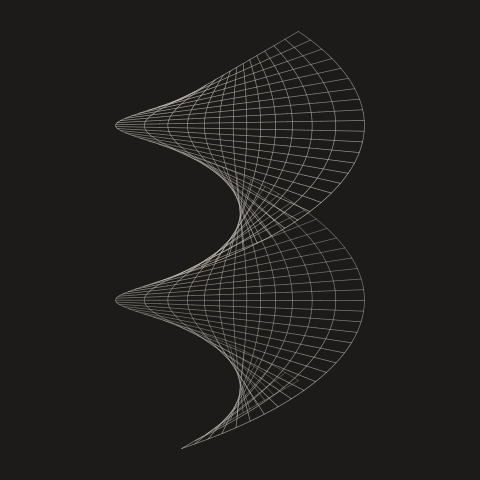
A spiral staircase of straight lines, the shape a soap film takes on a twisted wire. Bend it and it rolls up into a catenoid without stretching a single line.
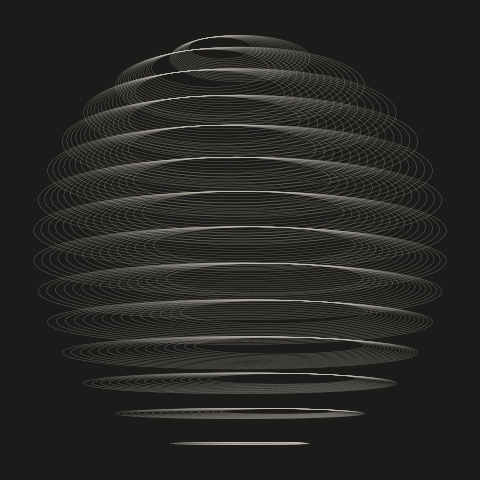
A sphere sliced into floating rings, each strung with circles that crowd to one side. The crowded edges climb the globe as a glowing spiral.
Twenty triangles whose every pair of neighbours meets at a right angle. Six pairs fold into deep notches, so a regular icosahedron turns star-like.
Closed loops of square bar that only ever run along the edges of a cube grid. Three tones are all it takes to read them as solid.
A hexagonal field of cubes, each cut again and again into boxes along its own small grid. Thin gaps between the boxes show the pieces packed inside.
A city in isometric view: blocks cut into lots, towers rising towards downtown, a river under its bridges, and one sun casting every shadow.
The five Platonic solids nested one inside another, with a sphere between each pair: Kepler's 1596 model of why there were six planets, and why they sat where they did.
A four-dimensional cube turning through a direction we cannot point to. Its far cube swells, passes through the near one and turns inside out, edges never bending.
A curved tower made entirely of straight lines. Two sets of lines lean opposite ways between rings, and the waist pulls in by itself, as in Shukhov's steel towers.
Steer a ship on one fixed compass bearing and it spirals for ever towards the pole. Drawn by the dozen they wind a globe like a ball of string.