
Ernst Chladni1756–1827
Standing-wave figures
German physicist and musician who made standing-wave nodes visible by scattering particles over vibrating plates.
Sand on a vibrating plate gathers along its still lines. Here an idealised standing-wave field reveals those lines directly, with nearby contours forming a delicate echo.
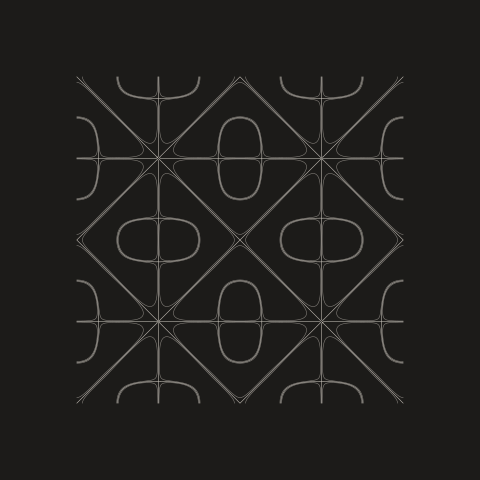
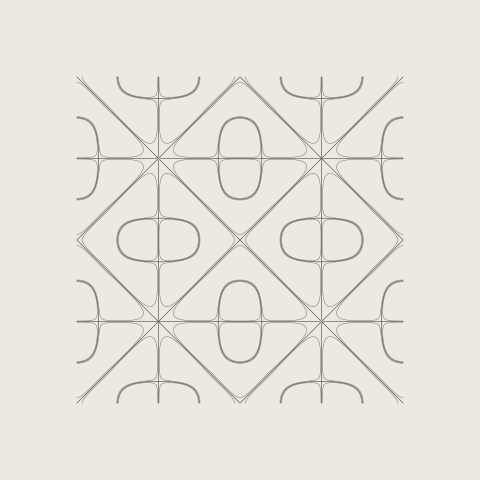
Ernst Chladni, 1787 · idealised standing-wave figures
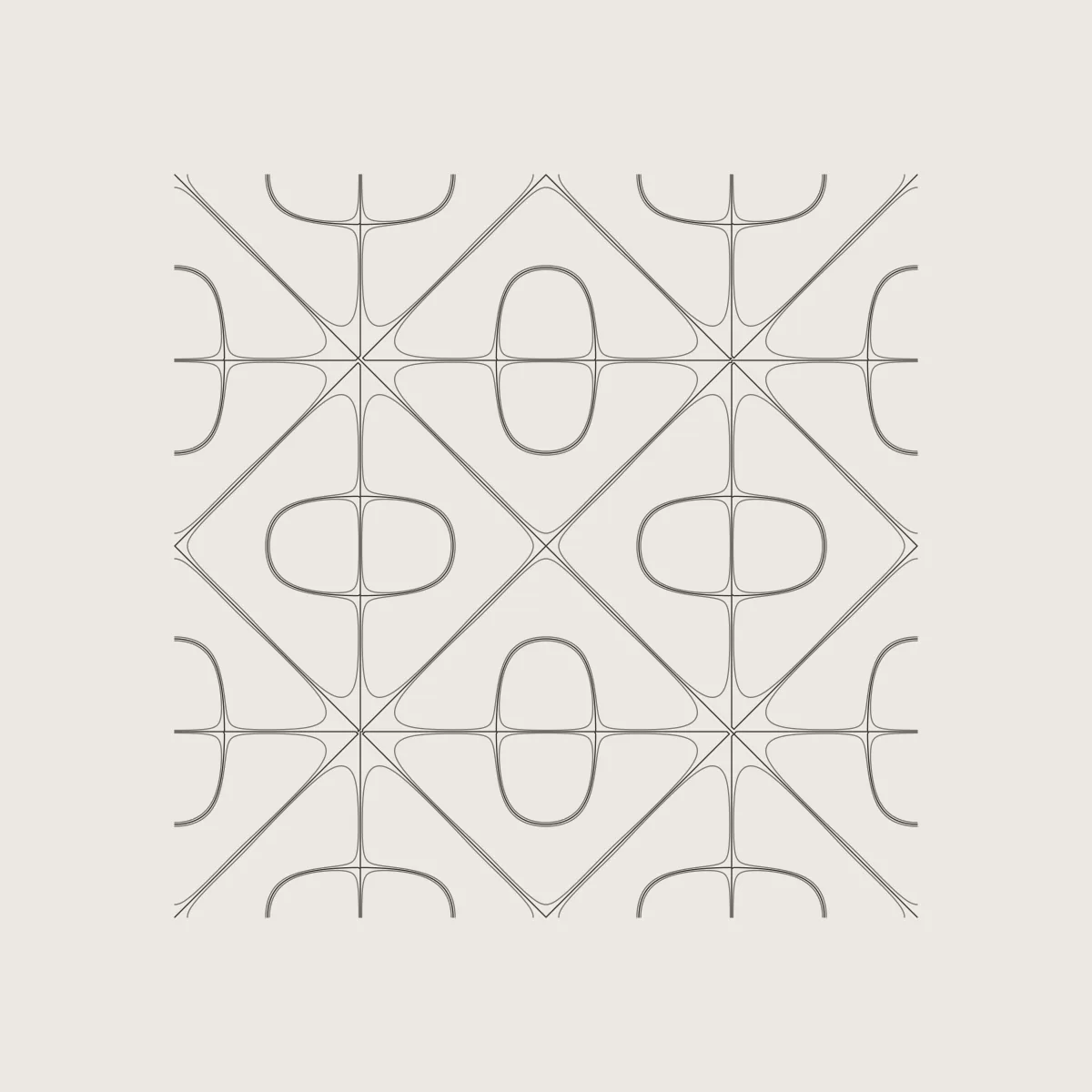
The drawing uses a cosine-mode approximation on a square, not a full elastic-plate simulation. With blend at zero, the central contour is the nodal set. Echo lines follow nearby field values; blending a second mode is an artistic extension rather than a single physical resonance.
Behind the mathematics
Standing-wave figures
German physicist and musician who made standing-wave nodes visible by scattering particles over vibrating plates.