
Sébastien Truchet1657–1729
The divided square, 1704
French mathematician whose 1704 study showed how rotations of one divided square could generate remarkably varied ornamental fields.
The original Truchet tile: a square cut on its diagonal, one half dark. Four turns of it, arranged by rule, give diamonds, chevrons and pinwheels.
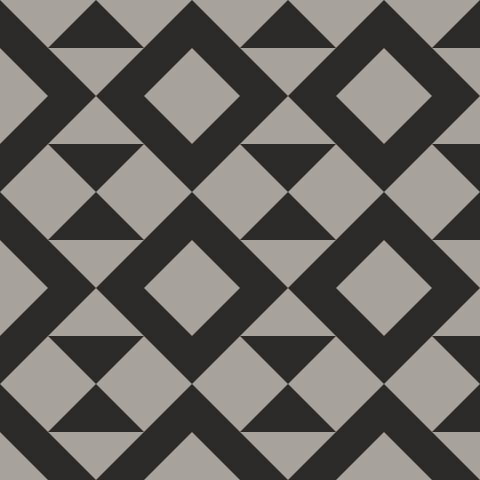
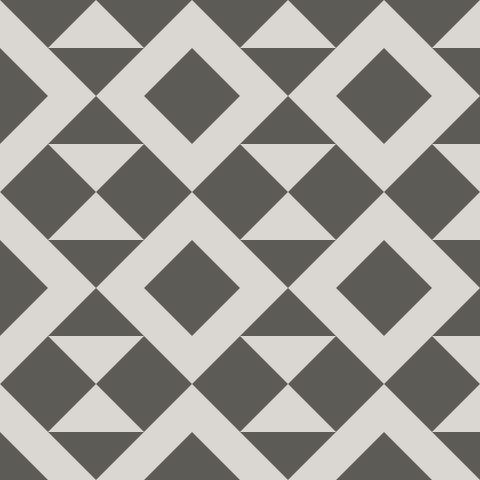
Sébastien Truchet, 1704 · Dominique Douat, 1722
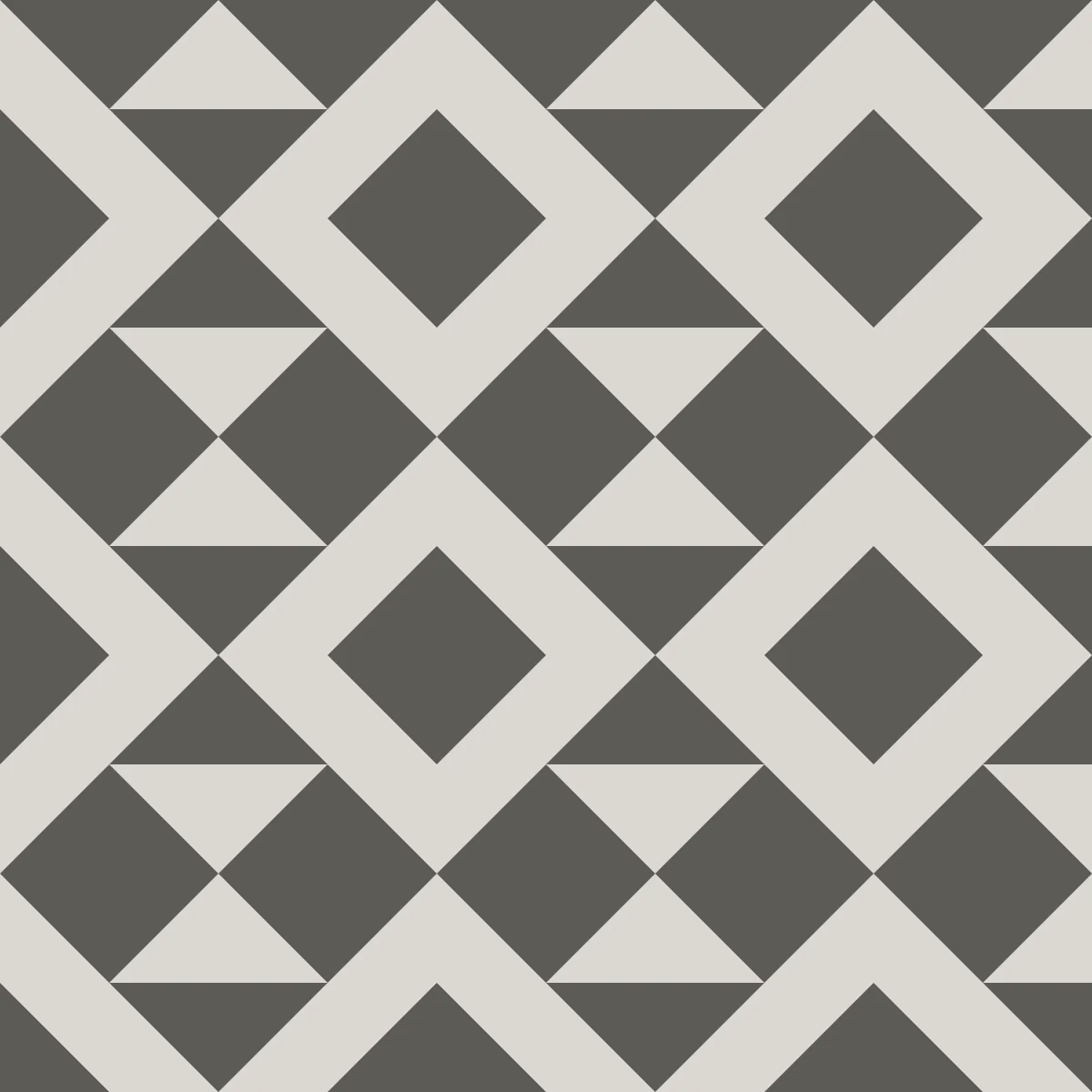
Truchet's 1704 memoir began with a square split corner to corner into two coloured triangles, and asked how many patterns its four rotations could make. Douat answered in 1722 with a method: fix a small block of tiles, then fill the plane with copies of that block mirrored or turned by a rule, which is how the diagonal square became a pattern language rather than a tile.
The quarter-circle Truchet tile most people know came much later, from Cyril Stanley Smith in 1987. The tide control swaps the tones across a diagonal, the way the posters it resembles change colour halfway down the sheet.
Behind the mathematics
The divided square, 1704
French mathematician whose 1704 study showed how rotations of one divided square could generate remarkably varied ornamental fields.
Designs by rule from a motif, 1722
Carmelite friar who took Truchet's divided square and showed that a few tiles, arranged by rule rather than by eye, generate an unlimited catalogue of designs.