
Henry Fox Talbot1800–1877
Photographic screen
English inventor of the calotype who patented the ruled screen that lets a printing press render continuous tone as varying dot area.
A regular screen of dots where only the size carries the picture. Turn the screen off-axis, change the field beneath it, and tone becomes texture.
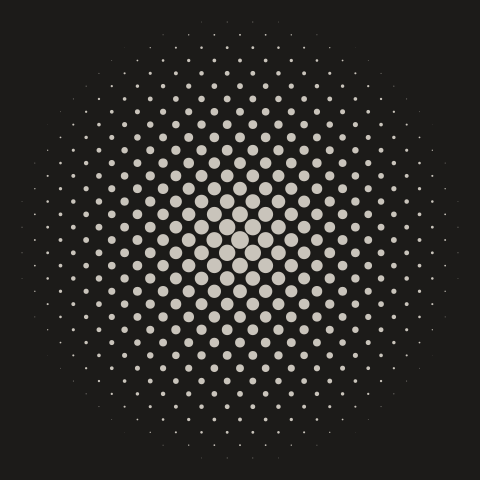
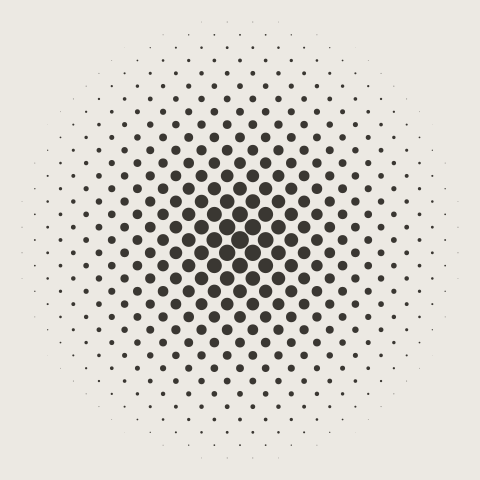
Halftone screen · Henry Fox Talbot, 1852
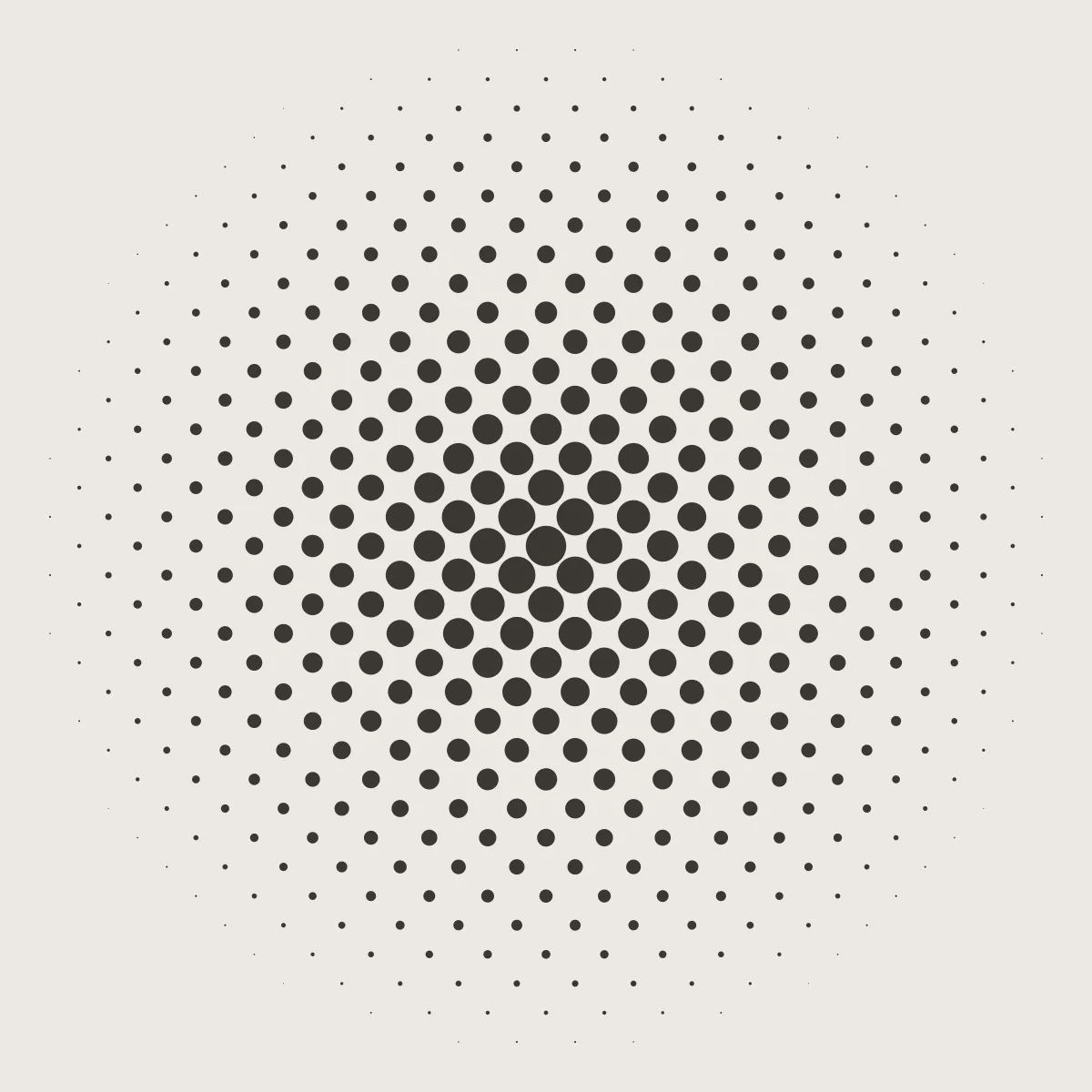
Printing renders continuous tone by varying dot area on a fixed grid, not by varying ink. Here the underlying field (radial, linear, wave, vortex or noise) sets each dot's area, and the screen angle turns the lattice off the horizontal so the eye reads tone rather than rows. Contrast is a gamma on the field: low values flatten it, high values crush it toward the extremes.
Behind the mathematics
Photographic screen
English inventor of the calotype who patented the ruled screen that lets a printing press render continuous tone as varying dot area.