Cubes per row · Rows · Top speed (× light)
Flat drawings that open into space. Vanishing points, coffered vaults, tiled floors and the relativistic Terrell rotation show how a picture plane holds depth.
Cubes per row · Rows · Top speed (× light)
Columns · Bulge · Reach
Arm length · Built from · Cube size
Frames · Spacing · Weight
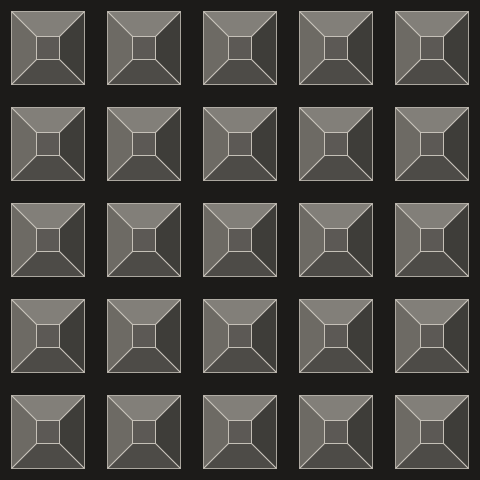
Columns · Recess · Rim
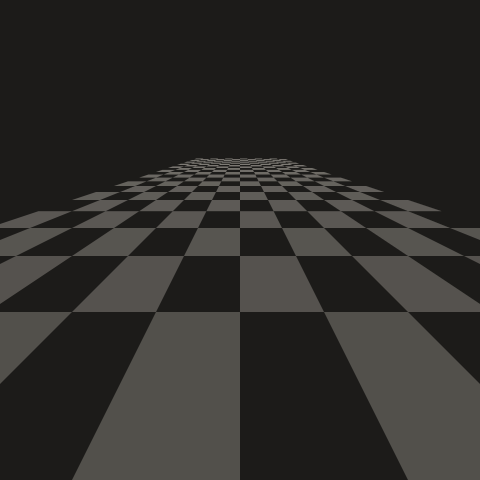
Tiles across · Depth · Horizon
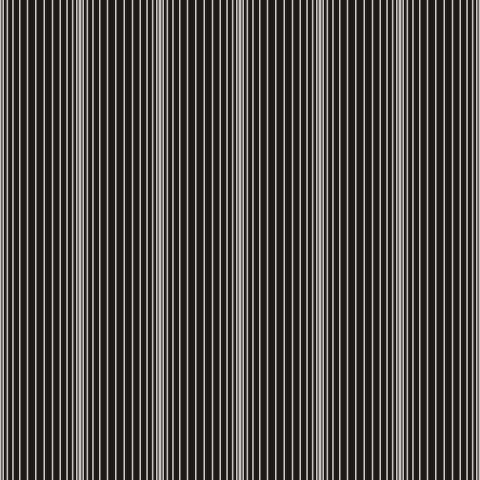
Ridges · Lines a ridge · Weight
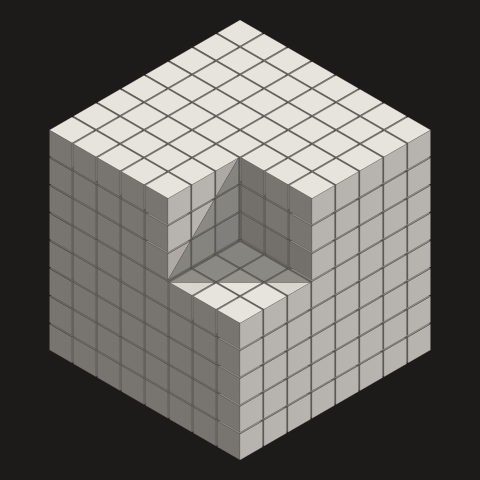
Cubes a side · Taken out · Pile size
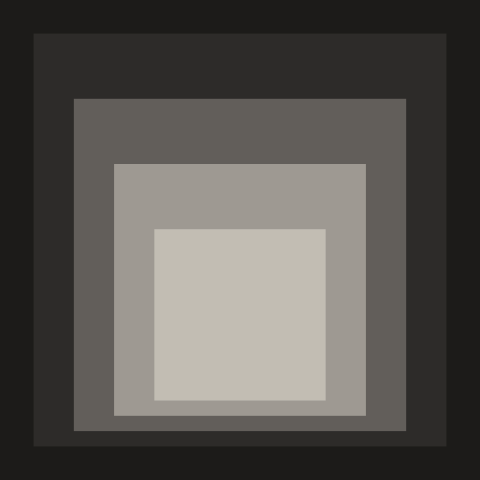
Squares · Weighting · Tonal range
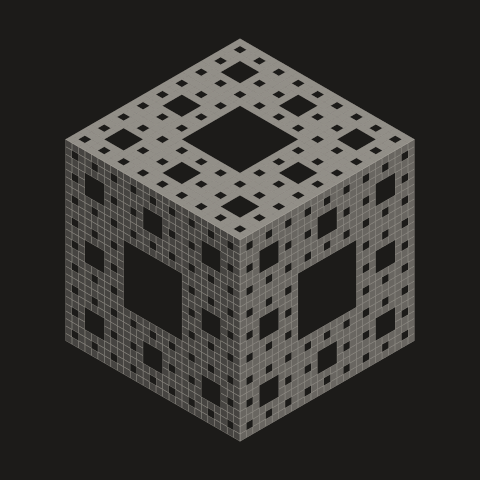
Depth · Weight · Face contrast
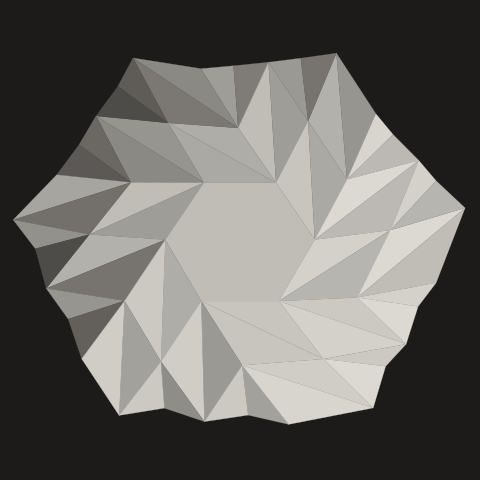
Sides · Rings · View
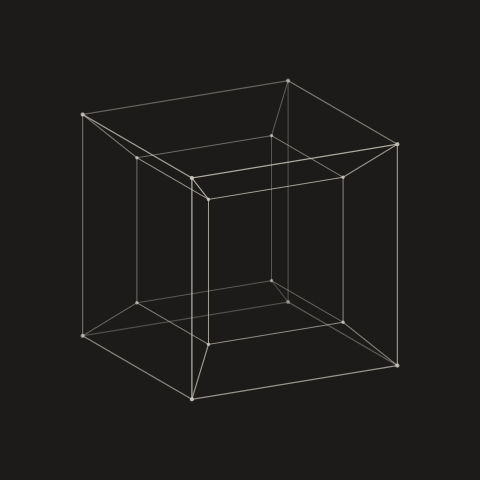
Polytope · Turning · Fourth-axis turn
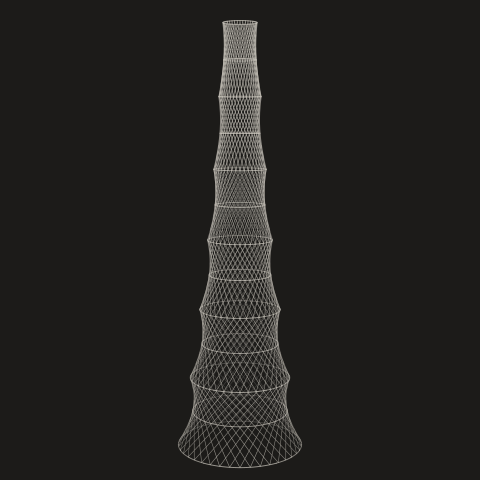
Sections · Lines each way · Lean
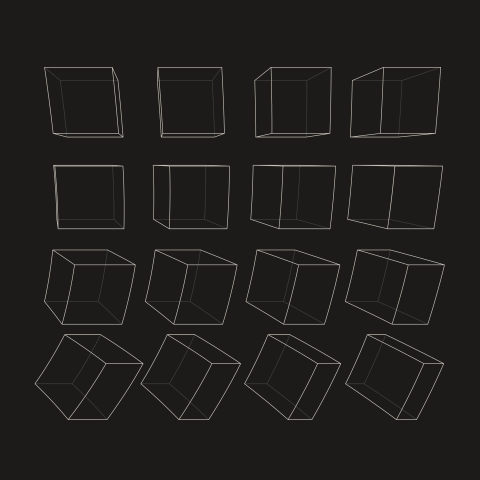
Cubes photographed as they rush past at near light speed. They are shorter in motion, yet the camera shows them turned, not squashed: the Terrell–Penrose effect, computed exactly.
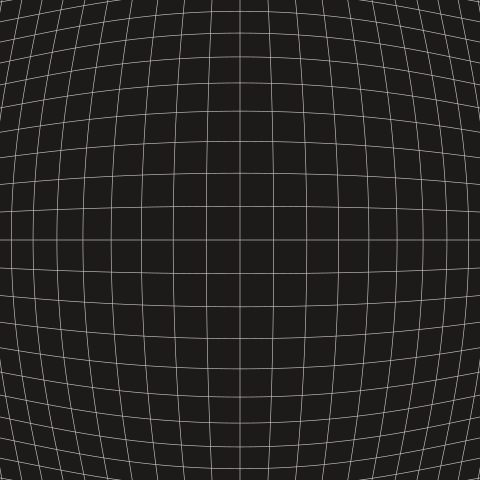
A flat grid, pushed outward from the middle. The page stays flat and a sphere sits on it anyway.
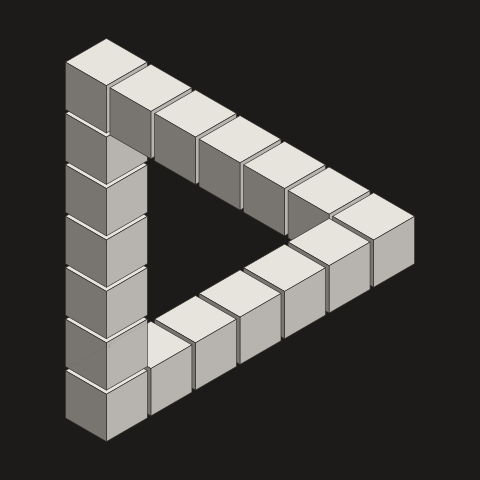
Three arms of cubes, each turning a square corner on the last, arriving back where they began. Follow any arm and it is ordinary.
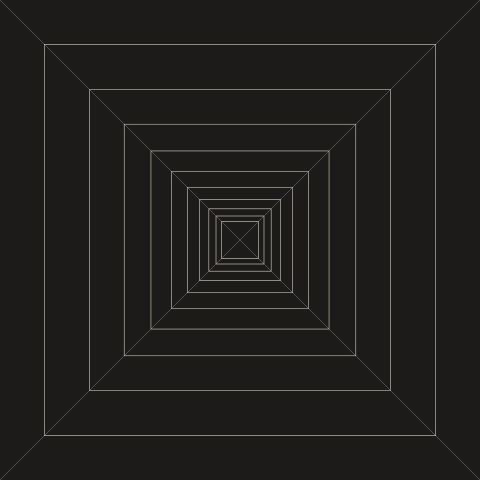
Frames receding to a single point, each one the same size as the last and none of them the same on the page.
A ceiling of sunk panels. Every recess is cut the same way, and the four sides of each take their own tone.
A chequered pavement running to the horizon. Every tile is square and no two are drawn the same shape.
Ruled lines that crowd where the sheet turns away and open where it faces you. Nothing is shaded; the spacing does all of it.
A cube of small cubes with a pile taken out of its corner, lit by a low sun. Every pile that fits is a plane partition, and seen from the corner each one tiles a hexagon with rhombi.
Squares inside squares, sitting low in the frame. Each step of tone is equal, and none of them look it.
A cube whose three visible faces have had their middles removed, and the middles of what is left, and so on.
A polygon ringed with Yoshimura creases that folds from a flat sheet through a bowl to a flat stack the size of its centre, like a flower closing.
A four-dimensional cube turning through a direction we cannot point to. Its far cube swells, passes through the near one and turns inside out, edges never bending.
A curved tower made entirely of straight lines. Two sets of lines lean opposite ways between rings, and the waist pulls in by itself, as in Shukhov's steel towers.